
NBA Graded Cards: The Ultimate Investor's Guide
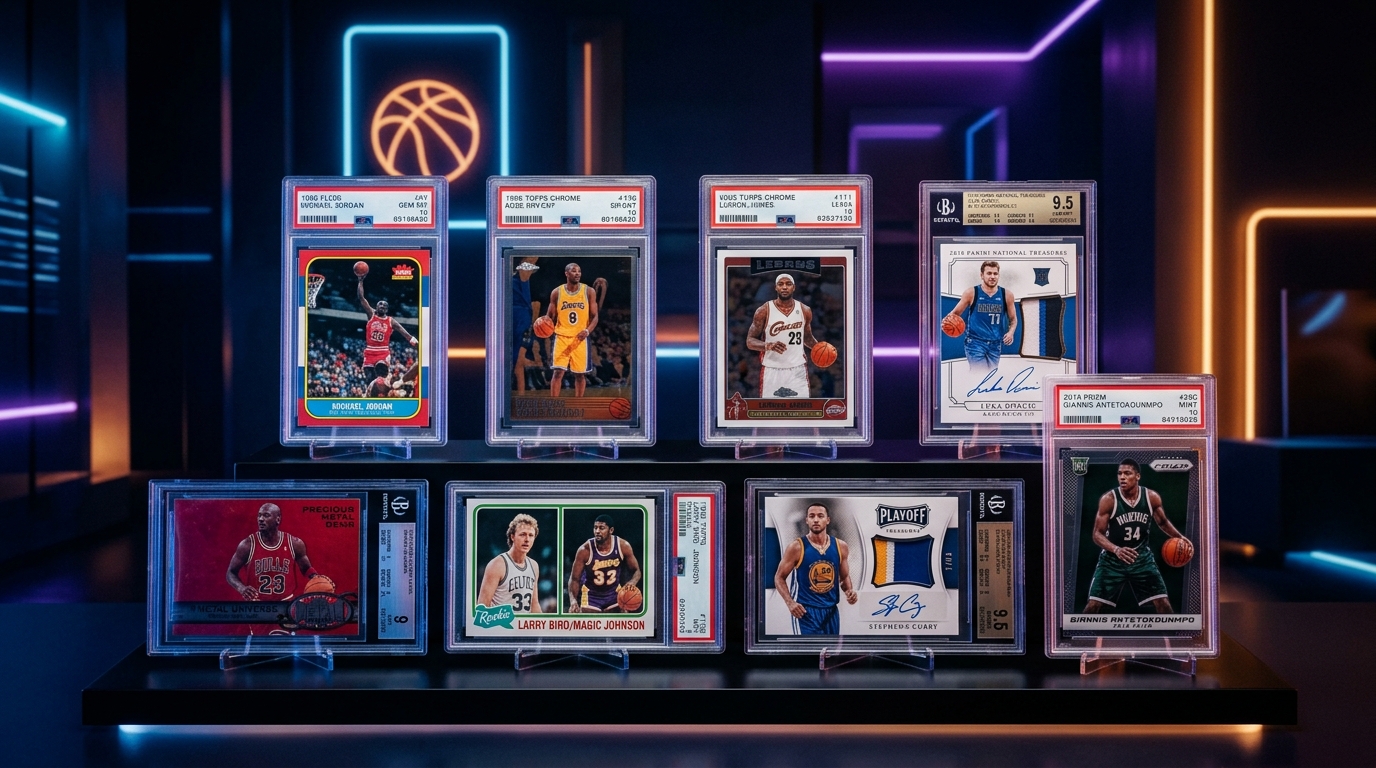
Collecting and investing in nba graded cards has transformed from a nostalgic hobby into a high-stakes alternative asset class. Whether you are holding an iconic 1986 Fleer Michael Jordan rookie or a modern, hyper-short-print neon parallel of Victor Wembanyama, a slabbed grade from a major authentication service defines its liquidity and absolute worth. Professional authentication shields buyers from counterfeits and establishes a standardized assessment of physical condition, which in turn sets the foundation for modern pricing models.
For both novice collectors and veteran sports card traders, navigating the difference between raw and graded cards is the single most important factor in maximizing return on investment. A raw card purchased for a few dollars could be worth thousands if it receives a pristine Gem Mint grade, but it can also result in financial loss if grading reveals minor surface indentations or centering issues invisible to the naked eye. In this comprehensive guide, we will analyze why graded basketball cards command such massive premiums, compare the major grading giants, outline step-by-step pre-grading checks, and examine the strategic market behaviors needed to build a profitable collection.
1. Why NBA Graded Cards Command Massive Premiums
The premium commanded by graded basketball cards over their raw counterparts is a direct result of market trust and the elimination of transaction risk. When a sports card is authenticated and graded, it is encapsulated in a tamper-proof sonically sealed plastic holder (often referred to as a “slab”). This slab carries a certification label detailing the card’s year, manufacturer, subset, serial number, and numerical grade from 1 to 10.
There are three primary drivers behind the grading premium:
Condition Standardization and Population Reports
Raw card descriptions are notoriously subjective. A seller on a digital marketplace might describe a card as “Near Mint to Mint,” but under high magnification, that same card might show soft corners or micro-scratches. Grading replaces subjective descriptions with an objective, standardized numeric scale. Additionally, grading companies maintain publicly accessible “population reports,” which document exactly how many copies of a specific card have been graded at each level. If a card is limited to a low pop count at PSA 10, the supply is mathematically constrained. Investors will bid aggressively to secure these rare Gem Mint examples, raising the sports cards value significantly.
Counterfeit Prevention and Autograph Authentication
As basketball cards have risen in value, counterfeit operations have grown increasingly sophisticated. Fake vintage rookies, trimmed edges, recolored borders, and forged player autographs are persistent threats. When you buy graded cards, you are paying for professional authentication. Multi-million-dollar transactions, such as buying a high-grade vintage card, are made possible because the buyer knows the card’s authenticity is guaranteed by third-party experts. For modern patch autographs, grading services also verify that the signature is authentic and check whether the embedded jersey patch is genuine and player-worn.
Preservation and Display Value
Slabs are designed to preserve cards in their exact graded condition indefinitely. They protect the delicate cardboard corners and paper stock from moisture, dust, UV exposure, and physical handling. Furthermore, the standardized dimensions of slabs make them easy to store, stack, and display. This consistency has allowed graded cards to function like liquid financial assets, tradeable on digital card exchanges and auction houses with minimal friction.
2. Understanding the Major Sports Card Grading Companies (PSA, BGS, SGC)
The sports card industry is dominated by three main grading services, each with its own grading scale, registry system, and brand perception among collectors. Choosing the right service depends on the era of the card, the potential grade, and your target audience.
| Grading Company | Strengths | Known For | Market Share & Premium |
|---|---|---|---|
| PSA (Professional Sports Authenticator) | Maximum resale value, registry competition | Red labels, standard slab design | Dominates modern and vintage sports cards |
| BGS (Beckett Grading Services) | Subgrades, inner sleeves, thick card cases | Sturdy cases, gold/black labels | Popular for ultra-modern high-end patch autos |
| SGC (Sportscard Guaranty Corporation) | Fast turnaround, sleek black inserts | The “Tuxedo” slab look | Highly respected for vintage card grading |
PSA: Professional Sports Authenticator
PSA is the undisputed market leader in terms of volume and resale premium. For the vast majority of modern basketball cards, a PSA 10 (Gem Mint) command the highest price premium in the industry. PSA utilizes a simple 1-10 scale and does not provide subgrades on their standard labels. The strength of PSA lies in its massive registry community, where collectors compete to build complete graded sets. This competitive ecosystem drives a constant demand for PSA-certified cards, making PSA slabs the most liquid asset in the hobby.
BGS: Beckett Grading Services
Beckett is highly respected for its detailed grading criteria. Unlike PSA, BGS offers “subgrades” for Centering, Corners, Edges, and Surface. These subgrades are displayed on the label, providing collectors with absolute transparency about why a card received a particular overall grade. A BGS 9.5 (Gem Mint) is generally comparable to a PSA 10, though PSA 10s still hold a slight price edge. However, if a card receives a BGS 10 (Pristine) or the legendary “Black Label” (10s across all four subgrades), it can command a massive multiplier that far exceeds a standard PSA 10. Beckett is the preferred choice for thick cards, such as patch autographs, because their thick cases offer superior protection for heavy card stocks.
SGC: Sportscard Guaranty Corporation
SGC is affectionately known as the “Tuxedo” slab due to its clean black paper insert that frames the card. SGC is highly regarded for its fast turnaround times, consistent grading standards, and excellent customer service. Historically a vintage grading specialist, SGC has made massive inroads into modern card markets. For vintage cards, SGC is often viewed as a direct competitor to PSA, with high-grade SGC vintage cards selling for comparable prices. SGC’s black frame highlights the bright borders of basketball cards, making it a favorite for collectors who prioritize visual appeal.
3. How to Pre-Grade Your Basketball Cards
Before spending money on grading fees and waiting weeks for your submission to return, it is essential to pre-grade your cards. Pre-grading is the practice of inspecting your cards under professional lighting and magnification to estimate their potential grades. Submitting cards that return with low grades is a common rookie mistake that can destroy your margins.
Here is the step-by-step checklist to pre-grade your cards:
1. Visual Inspection and Centering Analysis
Centering is the balance of the borders on the front and back of the card. Most grading companies allow a minor centering tolerance for a Gem Mint grade (typically 60/40 centering on the front and 75/25 on the back for PSA). To check centering, look at the ratio of the borders on the left-to-right and top-to-bottom sides. You can use a centering tool (a clear plastic grid overlay) to measure the exact border percentages.
2. Inspecting Corners and Edges
Corners are highly vulnerable to damage during packaging, handling, and storage. Examine each corner under a 10x jeweler’s loupe. Look for any fraying, rounding, or white paper showing through the print layer. Edges should be straight and clean. Look out for “chipping,” which is common on cards with dark borders, where the color chips away to reveal the white cardboard underneath. If you are unsure what to look for, check our guide on how to spot a fake sports card which details standard card print traits.
3. Checking Surface Condition
Hold the card at an angle under a strong light source. Examine the surface for light scratches, dimples, printing lines, scuffs, or fingerprints. Chrome and metallic cards are particularly prone to surface scratching. Wipe down raw cards gently with a microfiber cloth before submitting them, as fingerprints and dust can lead to a lower surface grade.
If you are grading baseball cards as well, you can read our specialized baseball card grading guide for vintage and modern baseball card nuances. Using modern AI pre-grading scanners, like CardMint, can automate this entire process by analyzing your centering, edges, and corners instantly using a simple smartphone scan.
4. Key Factors That Determine NBA Graded Cards Value
Once a basketball card is graded, its market value is determined by a combination of the numeric grade, historical pricing data, and the specific attributes of the card. Let’s analyze the five core factors that dictate these prices:
The PSA 10 vs. PSA 9 Price Spread
For modern cards, the difference between a Gem Mint 10 and a Mint 9 is night and day. A PSA 10 can sell for three to five times the price of a PSA 9, even though the physical differences between the two cards are often imperceptible to the untrained eye. This “grade spread” exists because the market places an extreme premium on absolute perfection. For vintage cards, the spread between grades is even wider. A vintage rookie in a PSA 8 might be worth $10,000, while a PSA 9 example of the same card could fetch $100,000 due to extreme scarcity.
Player Performance and Hype Cycles
Basketball card values are highly volatile because they are closely tied to real-life player performance. A breakout playoff game, a regular-season MVP run, or a trade to a major market team can cause a player’s graded card prices to double overnight. Conversely, a season-ending injury or a prolonged shooting slump can send prices tumbling. Investors must balance long-term holds (established Hall of Famers like Kobe Bryant or LeBron James) with short-term flips (hot rookies or rising stars). If you are looking at vintage investments, you should know that vintage cards tend to have stable, upward-sloping valuations compared to modern hype-driven markets.
Rookie Cards and Print Parallels
A player’s official Rookie Card (RC) is the anchor of their card catalog. If you want to understand how cards get marked with this designation, review our article explaining what does RC mean in detail. Beyond the base rookie card, modern sets feature “parallels” — version of the card with different colored borders, refractors, or print designs. Graded parallels that are serial-numbered (such as a Gold Refractor numbered to 10) represent the apex of collector desirability.
Analyzing eBay Sold Comps and Price Trackers
To price your collection accurately, do not rely on asking prices on active listings. Anyone can list a card for an inflated price. Instead, always analyze “sold comps” — the actual prices buyers have paid in recent transactions. The best way to check is by filtering eBay searches for “Sold Items” or using dedicated sports card price databases. For comparison, you can look at how TCG collectors track their collections in our pokemon price checker guide, which details how historical pricing data stabilizes alternative asset markets.
5. Strategies for Buying and Selling NBA Graded Cards
Success in the graded card market requires clear strategies, disciplined bankroll management, and an understanding of transaction fees. Here are three proven strategies for building a profitable portfolio:
1. The “Raw to Graded” Arbitrage Strategy
This is the most common way to generate significant returns. You buy clean, raw rookie cards of promising players, pre-grade them carefully, and submit them to a grading service. If you buy a raw card for $20, pay $19 for grading, and it returns as a PSA 10 worth $150, you have built a highly profitable loop. The key is strict quality control: only submit cards that have a realistic chance at a Gem Mint grade.
2. Buying the Dip on Graded Cards
Just like stock markets, the sports card market has seasonal dips. Basketball card prices typically peak during the NBA Playoffs and bottom out during the off-season (July to September). Savvy investors buy graded cards of established stars during the summer doldrums and hold them until the season starts again in October, when collector excitement returns.
3. Understanding Platform Fees and Liquidity
When selling your graded cards, choose the right sales channel to balance speed and profit. For high-end cards, auction houses offer maximum exposure but charge high buyer’s premiums. For lower-value cards, local card shows, online forums, and card-focused social networks allow you to sell directly to other collectors, avoiding platform fees entirely. If you are learning how to set up your listings and evaluate buyers, our guide on how to price sports cards for selling is a must-read resource.
6. Frequently Asked Questions (FAQ)
What is the most popular company for NBA graded cards?
PSA (Professional Sports Authenticator) is the industry leader for basketball card grading, accounting for over 75% of the graded sports card market share. PSA slabs are highly liquid and command the highest price premium for Gem Mint 10 grades. BGS is a strong alternative for thick patch autographs, while SGC is highly respected for vintage cards.
Does grading a card always increase its value?
Not always. If you submit a modern card that returns with a grade of PSA 8 or lower, its market value will often be less than the cost of the grading fee plus the original purchase price. Grading only increases value when the card is rare, vintage, or returns with a Gem Mint grade. Pre-grading is essential to avoid these losses.
How much does it cost to get NBA cards graded?
Grading costs vary depending on the grading company, the turnaround time, and the declared value of the card. Standard bulk rates typically range from $15 to $25 per card, while express service for high-value cards can cost $50 to $100 or more. Always check the current pricing on the grading company’s official website.
What is the difference between a BGS 9.5 and a PSA 10?
Both represent “Gem Mint” condition, but PSA 10 slabs generally command a higher price premium on the secondary market. BGS 9.5 slabs provide detailed subgrades, which some collectors prefer. A BGS 10 (Pristine) or BGS Black Label is extremely rare and will sell for significantly more than a standard PSA 10.
Should I grade my vintage basketball cards?
Yes, vintage basketball cards (pre-1980) should almost always be graded if they are in collectible condition. Grading authenticates vintage cards, protects them from damage, and establishes a clear value. Even low-grade vintage cards (PSA 2 or 3) sell for consistent prices because buyers value the guarantee of authenticity.
How do I protect my graded cards?
Graded cards should be stored in fitted plastic sleeves (often called slab bags) to prevent the plastic cases from scratching. Keep your slabbed collection in a cool, dry, and dark place. Specialized hard-shell cases with foam inserts are highly recommended for transporting graded cards to card shows or meetups.
Ready to start grading? Build your inventory and evaluate your cards with professional-grade tools. Read our detailed guide on rare NBA cards to target high-yield targets, or check out our guide on how to check your Pokemon card worth to expand your collection into the TCG space.
Pre-Grade & Track Values Instantly with CardMint
CardMint is the ultimate all-in-one scanner for sports card and TCG collectors, saving you time and money.
Simply scan the front of your card. Our AI instantly identifies the card details, checks current pricing metrics, and gives you a centering and wear pre-grade report before you submit to PSA/BGS.
