
Rare NBA Cards: Ultimate Collector's Value & Pricing Guide
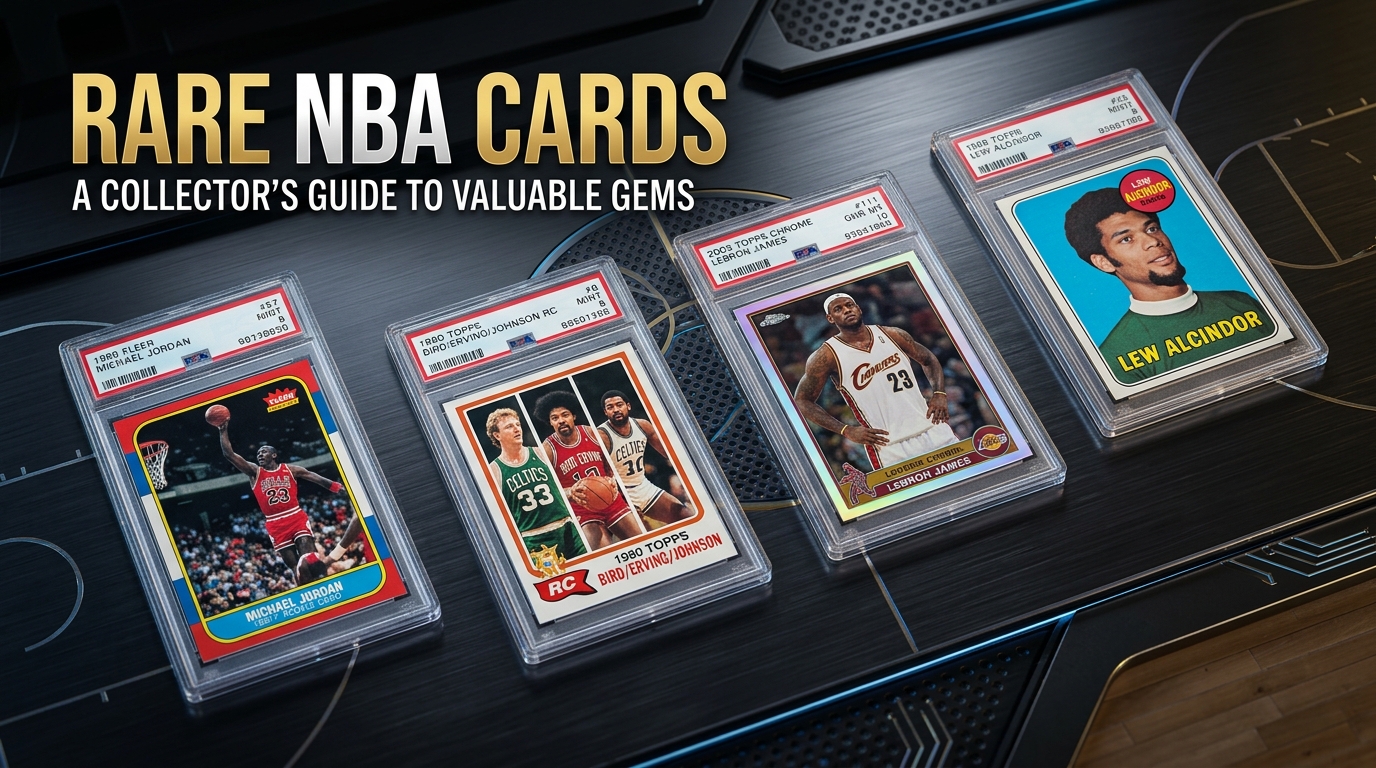
For sports card enthusiasts and high-end alternative investors, rare nba cards have transformed from childhood collectibles into highly sought-after financial assets. Over the past several decades, the market for vintage and modern basketball cards has reached unprecedented heights. Single cards that once cost pocket change now command six-figure and even seven-figure prices at international auction houses. Whether you are a veteran collector seeking to acquire premium graded slabs or a beginner sorting through a shoebox of cards in your attic, understanding how to evaluate, authenticate, and price these cards is essential to maximizing your investment.
In this comprehensive guide, we will analyze the most legendary basketball cards in history, examine the key factors that drive their secondary market valuations, and provide actionable tips on how to determine the value of your own collection using modern scanning technology.
The Legendary Kings of Rare NBA Cards
To truly understand the basketball card market, you must familiarize yourself with the iconic pieces that define the hobby. These cards represent the pinnacle of scarcity, player legacy, and historical significance.
The 1986 Fleer Michael Jordan Rookie Card
No discussion of basketball card collecting is complete without mentioning the 1986 Fleer Michael Jordan #57. While not the rarest card in terms of total print run, it is the single most important card of the modern era. Released at a time when basketball cards were struggling to find mainstream distribution, the 1986 Fleer set became a classic due to its vibrant borders and the inclusion of numerous Hall of Fame rookie cards.
A Michael Jordan rookie card in a perfect PSA 10 (Gem Mint) grade is a holy grail asset. In early 2021, copies of this card set records by selling for over $738,000. Because the red, white, and blue borders of the 1986 Fleer set are highly susceptible to chipping, finding a copy with perfect corners, clean edges, and immaculate surface condition is extremely rare.
The 2003-04 Exquisite Collection LeBron James RPA
As the hobby shifted into the 2000s, manufacturers introduced premium products featuring player autographs and game-worn patches. The pinnacle of this era is the 2003-04 Upper Deck Exquisite Collection LeBron James Rookie Patch Autograph (RPA). Serial-numbered to just 99 copies, this card represents the gold standard of modern basketball cards.
In April 2021, a copy of the LeBron James Exquisite RPA graded BGS 9 (Mint) with a 10 autograph subgrade sold in a private sale for $5.2 million. This transaction cemented modern “ultra-modern” cards as legitimate rivals to vintage sports cards. The combination of LeBron James’ historic legacy, the extreme rarity of the /99 print run, and the premium patch piece makes this card a cornerstone of high-end alternative asset portfolios.
Pre-Modern Classics: Bill Russell and Lew Alcindor
Before the boom of the 1980s and 2000s, pre-modern vintage cards established the foundation of the hobby. Cards like the 1957-58 Topps Bill Russell rookie card and the 1969-70 Topps Lew Alcindor (later Kareem Abdul-Jabbar) rookie card are highly prized.
The 1969-70 Topps set is famous for its unique “tallboy” design, which made the cards taller than standard sports cards. Because of their non-standard size, these cards were difficult to store safely, leading to soft corners and surface damage over time. High-grade specimens of tallboy vintage rookies are incredibly difficult to find, making them primary targets for vintage collectors.
Crucial Factors Driving the Valuation of Rare Basketball Cards
How does a piece of cardboard achieve the same value as a luxury vehicle or a suburban home? The pricing structure of the basketball card market relies on specific variables that determine overall desirability.
Rarity and Serial Numbering
In the modern era of card manufacturing, companies control scarcity through serial numbering. You will often see fractional numbers stamped in gold foil on a card (e.g., 25/99 or 05/10). This indicates that only 99 copies of that specific card were ever produced, and you hold the 25th copy.
The rarest modern variations are “One-of-One” cards, which include Superfractors and masterworks. A one-of-one card has a print run of exactly one, meaning no other copy exists anywhere in the world. As we saw in our guide on the most expensive baseball card, one-of-one cards of superstar athletes can easily command millions of dollars due to their absolute exclusivity.
Condition and Professional Grading Standards
The physical condition of a card is the single most critical factor in its final sale price. Even a minor defect that is invisible to the naked eye can cut a card’s value by 80% or more. To standardize condition, collectors send their cards to professional grading companies like PSA, SGC, or BGS.
Grading specialists evaluate four core components:
- Centering: How well the image is aligned within the card borders (usually measured in ratios like 60/40 or 50/50).
- Corners: Whether the corners are perfectly sharp or exhibit softness and wear.
- Edges: The clean cuts of the card sides, checking for chipping or roughness.
- Surface: The absence of print lines, scratches, creases, wax stains, or fingerprint oils.
A card is assigned a final numeric grade on a scale from 1 to 10. The difference between a PSA 9 (Mint) and a PSA 10 (Gem Mint) is massive. For example, a card that sells for $500 as a PSA 9 might command $5,000 as a PSA 10. If you want to maximize your returns, understanding the nuances of ai card grading can help you inspect your cards and estimate their potential grades before submitting them for formal encapsulation.
Player Legacy and Market Hype
A card’s value is inherently tied to the on-court performance and cultural impact of the player featured on it. Hall of Fame legends like Michael Jordan, Kobe Bryant, LeBron James, and Stephen Curry maintain stable long-term value. Conversely, active players’ card prices fluctuate wildly based on their recent performances, playoff runs, and championship rings. Speculating on young rookie players is a high-risk, high-reward strategy that dominates the modern sports card hobby.
How to Identify and Price Your Basketball Cards
If you have discovered a collection of basketball cards in your home, you must follow a methodical process to identify their details, verify authenticity, and check current pricing.
Deciphering Card Attributes
Look at the front and back of the card to gather the key identifiers:
- Year of Release: Usually printed on the copyright line at the bottom of the card back.
- Manufacturer: Common brands include Fleer, SkyBox, Upper Deck, Topps, Panini, and Bowman.
- Card Number: Stamped on the back of the card, typically in the top or bottom corner.
- Card Type: Check if it is a standard base card, a parallel variation (with different colored borders or foils), an autograph card, or a memorabilia card containing a jersey swatch.
It is particularly important to check if the card is a rookie card. In the collecting community, a player’s first official cards are highly coveted. Understanding what does RC mean on a sports card is essential, as rookie cards are almost always the most valuable items in an athlete’s catalog.
Using Digital Tools and Scanners
Researching card values manually can be incredibly time-consuming. Fortunately, modern technology has simplified the process. Instead of browsing outdated print catalogs, you can check real-time digital databases.
For the most accurate valuations, you should check the “Sold” filter on eBay or consult dedicated sports card marketplaces. To protect your collection, you must also learn how to spot fake sports cards to avoid buying counterfeit items.
Once you have identified your valuable items, proper preservation is crucial. Follow the archival techniques outlined in our guide on how to store baseball cards to protect your cards from environmental damage. You can also review general market trends in our guide on sports card value to learn how to price sports cards for selling.
For a fast, interactive experience, you can scan your cards using the CardMint mobile app to identify them instantly, track their market values, and manage your digital catalog.
Frequently Asked Questions (FAQ)
What makes a basketball card rare?
A basketball card is considered rare if it has a low print run. This can be due to historical reasons (like vintage cards that were lost or destroyed over time) or intentional manufacturing limits (like modern serial-numbered cards, patch autographs, or one-of-one printing plates).
How do I check the value of my old NBA cards?
To check the value of your old NBA cards, identify the manufacturer, year, and card number. Search for that exact card in eBay’s “Sold” listings to see what buyers have recently paid, or use online price checkers. Alternatively, scan the card with the CardMint app for an instant market value estimate.
Which is the most expensive basketball card ever sold?
The most expensive basketball card ever sold is the 2003-04 Upper Deck Exquisite Collection LeBron James Rookie Patch Autograph (RPA) serial-numbered to /99, which sold in a private transaction for $5.2 million in April 2021.
Is it worth getting my basketball cards professionally graded?
Yes, getting your cards graded by companies like PSA, SGC, or BGS is highly recommended if they are in excellent condition and have significant baseline value. Grading certifies the card’s authenticity and establishes an official condition grade, which can drastically increase its market value.
Pre-Grade & Track Values Instantly with CardMint
CardMint is the ultimate all-in-one scanner for sports card and TCG collectors, saving you time and money.
Simply scan the front of your card. Our AI instantly identifies the card details, checks current pricing metrics, and gives you a centering and wear pre-grade report before you submit to PSA/BGS.
