
Football Card Grading: Complete Collector's Guide & Value Impact
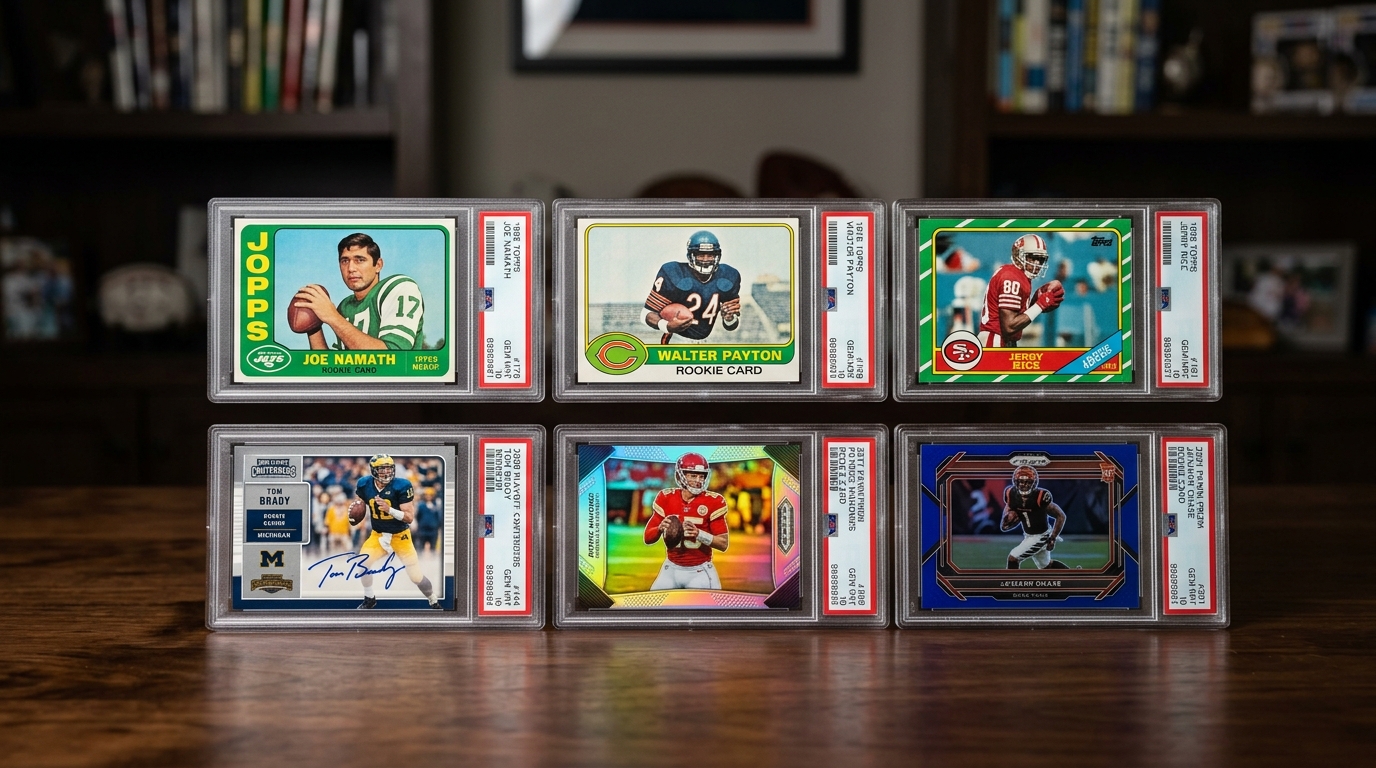
If you want to protect your NFL investment and maximize resale value, understanding football card grading is the most critical skill for modern sports card collectors. The market for gridiron trading cards has exploded over the past decade. From iconic vintage treasures like the 1958 Topps Jim Brown rookie to modern high-end Panini National Treasures patch autographs of Patrick Mahomes, Tom Brady, and CJ Stroud, third-party authentication has become the definitive benchmark of quality and market liquidity.
In this comprehensive guide, we will break down everything you need to know about football card grading. You will discover how third-party grading companies evaluate physical condition, how to pre-grade your cards accurately before submission, which grading services offer the best ROI for specific card types, and how leverage modern technology to avoid costly grading mistakes.
What Is Football Card Grading and Why Does It Matter?
At its core, football card grading is the formal evaluation of a trading card’s physical condition and authenticity by an independent third-party service. Professional numismatists and card authenticators inspect the card under optical magnification, high-resolution digital cameras, and specialized UV lighting to assign a standardized numerical grade on a 1-to-10 scale.
Once evaluated, the card is permanently encapsulated in a tamper-evident, sonically sealed plastic holder—commonly called a slab. This slab features a protective header label displaying the card’s year, manufacturer, set name, player name, serial number, and final assigned grade.
Authentication and Counterfeit Prevention
The primary objective of submitting cards for grading is establishing undeniable proof of authenticity. As vintage and modern NFL cards have risen in value, sophisticated counterfeits, trimmed borders, recolored edges, and altered autographs have infiltrated the secondary market.
Third-party grading services verify that the card is genuine, un-altered, and correctly cataloged. For high-ticket items like a 2000 Playoff Contenders Tom Brady Rookie Ticket autograph or a 1986 Topps Jerry Rice rookie, raw uncertified cards carry immense risk. Encapsulation removes buyer doubt, allowing transactions on secondary platforms to proceed seamlessly without hesitation.
Physical Protection and Long-Term Archival
NFL trading cards are susceptible to environmental hazards, including humidity, ultraviolet radiation, dust, skin oils, and mechanical friction. Traditional penny sleeves and top-loaders offer temporary safety, but they do not seal out airborne moisture or prevent cards from sliding within the sleeve over time.
Grading slabs are constructed from archival-grade, rigid polycarbonate polymer with built-in UV blocking technology. Once sealed, your valuable cards are shielded against moisture ingress, surface scratches, and accidental drops. Proper archival storage ensures your collection maintains its pristine condition for decades to come.
The Value Multiplier Effect on NFL Cards
Condition dictates value in the sports card hobby. The financial disparity between a card in near-mint condition and one in pristine gem mint condition can be staggering. A card graded PSA 10 (Gem Mint) often sells for 3x to 10x more than the exact same card in a PSA 9 slab, and up to 50x more than a raw ungraded copy.
To understand the dramatic financial impact of grading on valuable football cards, consider the comparative market pricing in the table below:
| Card / Player | Raw Condition | PSA 8 (NM-MT) | PSA 9 (Mint) | PSA 10 (Gem Mint) |
|---|---|---|---|---|
| 2000 Playoff Contenders Tom Brady Autograph #144 | $12,000 | $22,000 | $45,000 | $280,000 |
| 2017 Panini Prizm Patrick Mahomes Silver #269 | $1,500 | $2,200 | $4,500 | $18,500 |
| 1986 Topps Jerry Rice Rookie #161 | $350 | $750 | $2,400 | $85,000 |
| 1958 Topps Jim Brown Rookie #159 | $1,200 | $8,500 | $45,000 | $350,000+ |
| 2020 Panini Prizm Joe Burrow Silver #307 | $120 | $180 | $350 | $1,450 |
As shown above, achieving a top-tier grade transforms a standard sports card into a highly coveted alternative asset. However, submitting a card that yields a sub-par grade can result in net financial losses after grading fees and shipping costs are factored in. This makes pre-grading analysis essential.
The Four Pillars of Card Pre-Grading
Before paying submission fees, every collector should master the four fundamental criteria used by grading companies: centering, corners, edges, and surface. Learning how professional authenticators evaluate these elements allows you to filter out flawed cards and only submit candidates with genuine Gem Mint potential. For broader insights across different sports, consult our guide on how to grade sports cards.
   ┌─────────────────────────────────────────────────────────────┐
   │                   THE 4 PILLARS OF GRADING                  │
   ├──────────────────────────────┬──────────────────────────────┤
   │  1. CENTERING                │  2. CORNERS                  │
   │  - Front: 55/45 to 60/40     │  - Sharpness under 10x mag   │
   │  - Back: 75/25 or better     │  - Zero whitening or fray    │
   ├──────────────────────────────┼──────────────────────────────┤
   │  3. EDGES                    │  4. SURFACE                  │
   │  - Smooth perimeter cuts     │  - No print lines or dimples │
   │  - Zero foil chipping        │  - Scratches & gloss quality │
   └──────────────────────────────┴──────────────────────────────┘
Centering: The 60/40 and 55/45 Standards
Centering refers to the symmetry of the image framed within the card’s borders. It is measured by comparing the distance between the design element and the outer physical edge on opposing sides (left-to-right and top-to-bottom).
- PSA 10 Gem Mint Standard: Front centering must not exceed 55/45 to 60/40 percent. Back centering can be up to 75/25 percent.
- BGS 10 Gem Mint Standard: Front and back centering must be virtually perfect at 50/50.
Modern chromium stock sets like Panini Prizm, Donruss Optic, and Select present framing challenges due to intricate border designs and laser-cut edges. Use a digital centering tool or grid loupe to measure border ratios before submitting.
Corners: Magnification and Micro-Fraying
Corners are the most vulnerable part of paper and cardstock. Grading authenticators inspect all four corners under 10x magnification to detect structural imperfections.
A Gem Mint corner must meet three criteria:
- Sharpness: The tip must form a clean 90-degree angle (or precise curve for die-cut cards) without rounding or blunt impact marks.
- Layering Integrity: Paper card stock consists of multi-layer paperboards. Any separation or “mushrooming” of layers downgrades the card immediately.
- Color Retention: No white paperboard should show through the colored surface printing.
Edges: Chipping on Foil and Dark Borders
Edge inspection involves examining the perimeter cut of the card stock. Manufacturing blade wear during factory production often leaves rough cuts, micro-burrs, or flaking foil.
Dark-bordered card sets—such as 1971 Topps Football or modern Panini Spectra and Black—are notoriously difficult to grade because the dark ink highlights even microscopic white paper chipping along the edges. When inspecting edges, look down the card under angled LED lighting to check for indentation marks, foil loss, or razor roughness.
Surface: Print Defect and Scratch Detection
Surface condition accounts for more unexpected grade drops than any other category. Modern chrome cards feature high-gloss UV coatings that easily attract fingerprints, micro-scratches, print lines, and wax residue.
Common surface flaws include:
- Print Lines & Dimples: Factory errors caused by roller pressure or dust during printing.
- Refractor Scratches: Fine hairline scratches on chrome surfaces that become visible under direct light.
- Autograph Smudges: For autographed cards, wet ink transferred or rubbed before drying degrades the overall presentation.
Comparing the Major Grading Companies: PSA, BGS, and SGC
Selecting the right grading company depends on your card’s era, value, and whether your goal is personal preservation or maximizing resale value. The big three authenticators dominate the football card market:
┌───────────────────┬──────────────────────────┬──────────────────────────┬──────────────────────────┐
│ Feature           │ PSA                      │ BGS (Beckett)            │ SGC                      │
├───────────────────┼──────────────────────────┼──────────────────────────┼──────────────────────────┤
│ Primary Focus     │ Market Value & Liquidity │ Modern Chrome & Patch AU │ Vintage & Fast Turnaround│
│ Slab Aesthetics   │ Red Border Header        │ Premium Metallic Slab    │ Sleek Black Tuxedo Pedestal│
│ Sub-Grades        │ No                       │ Optional (4 Categories)  │ No                       │
│ Top Grade Scale   │ PSA 10 Gem Mint          │ BGS 10 Pristine / Black  │ SGC 10 Gem Mint          │
└───────────────────┴──────────────────────────┴──────────────────────────┴──────────────────────────┘
Professional Sports Authenticator (PSA)
PSA is the undisputed market leader in secondary market sales volume and resale price realization. A PSA 10 Gem Mint slab commands a premium over virtually all competitors for standard sports cards.
- Strengths: Maximum market liquidity, highest resale value, dominant registry set community.
- Best For: Key most valuable rookie cards, vintage Hall of Famers, and high-demand modern parallels.
- Weaknesses: Higher grading fees on valuable cards, longer declared turnaround times during peak seasons.
Beckett Grading Services (BGS)
Beckett is celebrated for its rigid slab construction, internal sleeve protection, and detailed sub-grade breakdown (Centering, Corners, Edges, Surface).
- Strengths: Detailed sub-grades offer transparency; BGS 10 Pristine and BGS 10 Black Label sell at massive premiums above PSA 10.
- Best For: Thick patch autograph cards (Panini National Treasures, Flawless, Immaculate) where corner and edge protection is vital.
- Weaknesses: BGS 9.5 (Gem Mint) often sells slightly lower than a PSA 10 Gem Mint.
Sportscard Guaranty Corporation (SGC)
Known as “The Tuxedo” for its iconic black foam insert slab, SGC is renowned for fast turnaround times, competitive pricing, and outstanding vintage card presentation.
- Strengths: Rapid turnaround times, affordable submission pricing, exceptional visual contrast for vintage gridiron cards.
- Best For: Pre-1980 vintage football cards (1950 Bowman, 1958 Topps, 1976 Topps Walter Payton) and collectors seeking quick authentication.
- Weaknesses: Lower sales volume for ultra-modern non-vintage parallels compared to PSA.
Step-by-Step Guide to Submitting Your Football Cards
Submitting cards for grading requires careful preparation to prevent damage during transit and avoid delays at the grading facility.
Step 1: Inspect & Clean ──► Step 2: Select Service Tier ──► Step 3: Sleeve & Card Saver ──► Step 4: Pack & ShipStep 1: Pre-Screening and Cleaning Your Cards
- Illuminated Inspection: Work in a clean room under a 10x LED magnifying lamp.
- Microfiber Wipe: For chrome cards (Prizm, Optic), gently wipe the front and back using an ultra-soft microfiber cloth to eliminate dust, smudges, and fingerprints. Never use chemical cleaners or abrasive clothes.
- AI Pre-Grading Check: Utilize specialized digital tools like ai card grading software to scan your card for surface flaws and centering ratios before submission.
Step 2: Choosing the Right Submission Tier
Grading companies calculate service tiers based on the estimated declared value of the card after grading and your desired turnaround time.
- Bulk / Value Tier: Ideal for modern rookie cards valued under $200. Turnaround: 30–65 business days.
- Regular / Mid-Tier: Recommended for cards valued between $500 and $1,500 (e.g., Silver Prizm Rookies of elite QBs). Turnaround: 10–20 business days.
- Express / High-Value Tier: Mandatory for high-end vintage or premium autographs valued over $2,500. Turnaround: 3–5 business days.
Step 3: Proper Packaging and Shipping
Improper packaging causes irreversible corner damage. Follow this strict packing protocol:
- Insert the card into a clean, new penny sleeve.
- Slide the sleeved card into a semi-rigid holder (Card Saver 1). Avoid standard rigid top-loaders unless specifically permitted by the grading service, as cards can slide out during transit.
- Sandwich up to 20 Card Savers between two thick cardboard flats secured with rubber bands or painters tape.
- Wrap the cardboard bundle in bubble wrap and place it inside a sturdy shipping box.
- Ship via tracked, insured carriers (USPS Registered Mail or FedEx with declared value signature requirement).
Modern vs. Vintage NFL Card Grading Strategies
The strategy for grading gridiron cards varies significantly depending on the manufacturing era.
Modern Prizm, Optic, and National Treasures Autographs
Modern football card collecting revolves around rookie quarterbacks, refractor parallels (Silvers, Golds, 1-of-1s), and on-card autographs.
- Targeting Gem Mint: Because modern production quality is higher, buyers expect PSA 10 or BGS 9.5 condition. Submitting modern cards that yield a PSA 8 usually results in negative ROI.
- Thick Card Stock: Sets like Panini Flawless or National Treasures use 100pt to 180pt cardstock. These thick edges chip easily. Inspect thick patches under side lighting before submitting.
- On-Card Autographs: Ensure autograph ink is complete and un-streaked. PSA and BGS grade autographs separately; a 10 auto grade enhances overall market value.
Vintage Treasures: 1958 Topps Jim Brown to 1986 Topps Jerry Rice
Unlike modern cards, vintage football cards are rarely found in pristine condition due to older printing techniques, poor wax pack storage, and decades of handling.
- Adjusted Expectations: A PSA 7 (Near Mint) or PSA 8 (NM-MT) for a 1958 Topps Jim Brown or 1965 Topps Joe Namath “Tall Boy” is an extraordinary grade that commands thousands of dollars.
- Centering Issues: Vintage cards were sheet-cut using mechanical blades, resulting in severe off-centering. Finding 60/40 centering on a 1976 Topps Walter Payton is exceptionally rare.
- Authenticity First: Even low-grade (PSA 1 to PSA 4) vintage legend cards are worth grading simply to prove authenticity and secure preservation.
If you are exploring broader portfolio diversification across sports, examine our detailed overview of the best sports cards to invest in.
Frequently Asked Questions
How much does football card grading cost?
Football card grading costs range from $15 to $150+ per card depending on the grading company, declared card value, and turnaround speed. Bulk submission tiers for low-value modern cards start around $15 to $25 per card, while express grading for high-value cards like a Tom Brady rookie ticket can exceed $300 to $1,000+.
Is it worth grading raw NFL rookie cards?
Grading is worth it if the card is in top-tier condition (55/45 centering, sharp corners, flawless surface) and the graded market value comfortably exceeds raw market value plus submission costs. For high-demand rookie quarterbacks, achieving a PSA 10 often multiplies the card’s value by 3x to 5x compared to raw. Always pre-grade carefully before submitting.
How long does the grading process take?
Turnaround times range from 3 business days for Express / Premium tiers to 65+ business days for economy or value bulk tiers. Turnaround time begins once the grading facility logs and checks in the package.
What is the difference between a PSA 10 and BGS 9.5?
Both PSA 10 and BGS 9.5 represent “Gem Mint” condition in their respective systems. Historically, PSA 10 commands a higher resale market price for standard cards. However, if a card earns a BGS 10 Pristine or BGS 10 Black Label (10 in all four sub-grades), it commands a massive premium above a standard PSA 10.
Final Thoughts: Protecting and Monetizing Your Collection
Mastering football card grading is the ultimate key to transforming your card collection into a valuable, protected portfolio. By understanding the four pillars of grading, selecting the right grading company, and executing proper submission protocols, you maximize resale value while safeguarding gridiron history.
Before listing your graded or raw cards on the market, review our step-by-step strategies on how to sell sports cards and learn how to protect yourself against fakes with our guide on how to spot a fake sports card.
Ready to evaluate your football card collection? Use CardMint’s advanced suite to track card values, analyze historical sales trends, and grade your cards with precision!
Pre-Grade & Track Values Instantly with CardMint
CardMint is the ultimate all-in-one scanner for sports card and TCG collectors, saving you time and money.
Simply scan the front of your card. Our AI instantly identifies the card details, checks current pricing metrics, and gives you a centering and wear pre-grade report before you submit to PSA/BGS.
