
Valuable Football Cards: Collector & Price Guide
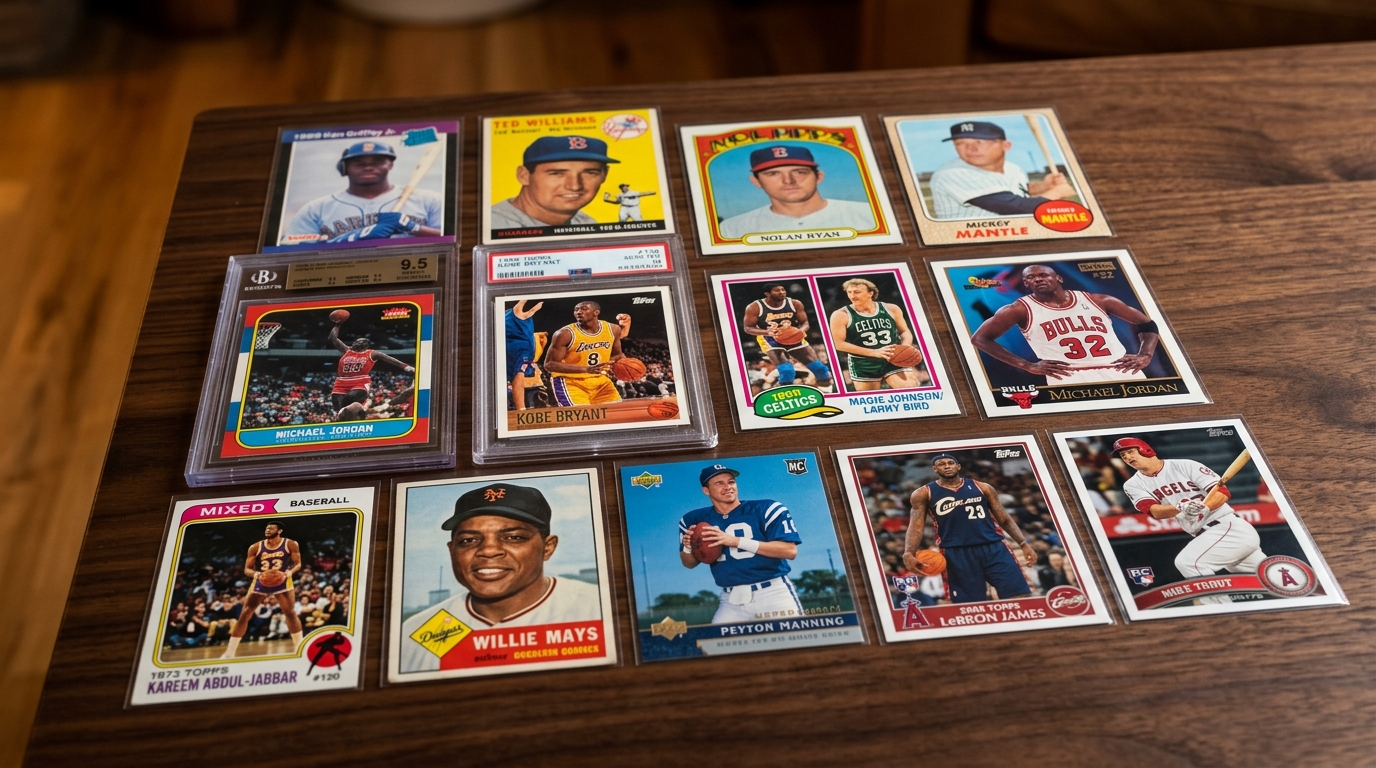
Finding and collecting valuable football cards has transformed from a nostalgic weekend hobby into a highly sophisticated alternative asset class. In the modern sports card market, a single cardboard rectangle can command the price of a luxury vehicle or even a piece of real estate. Whether you have inherited a binder of vintage classics or are actively trading high-end ultra-modern Rookie Patch Autographs, understanding what drives the value of these sports cards is essential to maximizing your collection’s potential.
The trading card landscape has shifted from simple schoolyard swaps to a data-driven investment market where prices react to player performance, injury reports, and macroeconomic trends. In this comprehensive guide, we will explore the history, structural anatomy, and pricing methodologies of the most valuable football cards, showing you exactly how to navigate the market and protect your investment.
Key Takeaway: The value of a football card depends on a combination of player performance, rarity (such as serial-numbered parallels), rookie designation, and third-party grading condition. Knowing how to evaluate these factors separates casual hobbyists from smart collectors.
The Historical Eras of Football Card Collecting
The history of football cards is divided into three distinct eras, each characterized by different printing techniques, distribution methods, and market dynamics. Understanding which era your cards belong to is the first step in assessing their potential value.
1. The Vintage Era (Pre-1980)
The vintage era represents the foundation of football card collecting. Produced primarily by companies like Topps, Bowman, and Philadelphia Gum, these cards were sold in wax packs along with sticks of bubble gum.
Vintage cards are highly valuable today because of their extreme scarcity. Prior to the 1980s, print runs were relatively small, and most cards were either thrown away by parents, taped to bedroom walls, or damaged in shoe boxes. High-grade vintage cards—especially those featuring Hall of Fame rookies like Jim Brown, Joe Namath, or Bart Starr—command massive premiums because finding them in pristine condition is extraordinarily rare.
2. The Junk Wax Era (1980–1999)
During the late 1980s and early 1990s, the popularity of collecting exploded. Sensing an opportunity, manufacturers like Topps, Fleer, Upper Deck, and Score flooded the market with massive print runs. Millions of cards were produced, and collectors carefully stored them in plastic sleeves, expecting them to appreciate in value.
Because of this overproduction, the vast majority of cards from this era are virtually worthless today. A card that is easy to find in perfect condition cannot maintain a premium price. However, there are notable exceptions, particularly high-grade rookie cards of legendary players like Peyton Manning, Randy Moss, and Brett Favre, as well as low-print-run insert sets that pioneered the modern search for rarity.
3. The Ultra-Modern Era (2000–Present)
The ultra-modern era has redefined the hobby by introducing manufactured scarcity. Instead of printing millions of identical base cards, manufacturers focus on creating limited-edition parallels, autographs, and game-worn memorabilia cards.
The benchmark for ultra-modern cards was set in 2000 with the release of Tom Brady’s rookie cards, and the market has since matured into a highly stratified ecosystem. Brands like Panini (featuring Prizm, National Treasures, and Flawless) dominate the space, offering everything from accessible retail products to high-end hobby boxes that cost thousands of dollars per pack.
The Anatomy of a High-Value Football Card
If you are looking for valuable football cards, you must know what elements to look for on the card itself. Modern cards are designed with specific features that determine their rarity and value.
1. Rookie Card (RC) Designation
In football card collecting, a player’s rookie card is almost always their most valuable card. A rookie card represents a player’s first official appearance in a licensed NFL product. The industry standard is to look for the “RC” logo printed on the card front.
Understanding what constitutes an official rookie card can be complex, as players often have dozens of different rookie cards across various brands. To learn more about this crucial designation, read our guide on what does RC mean on sports cards to understand how rookie emblems dictate market interest.
2. Autographs and Memorabilia (RPA)
The holy grail of ultra-modern collecting is the Rookie Patch Autograph (RPA). These cards feature an on-card autograph signed by the player, alongside a piece of a game-worn or player-worn jersey patch.
The quality of the patch itself can affect the card’s value. A plain, single-color jersey swatch is less desirable than a multi-color patch featuring a piece of a team logo, a player’s number, or a laundry tag. The cleanest on-card autographs (signed directly on the card surface rather than a clear plastic sticker) also command a premium.
3. Parallels, Refractors, and Serial Numbering
To create artificial scarcity, manufacturers produce “parallels” of base cards. Parallels feature the same photo and card design but use different colored borders, holographic backgrounds, or shiny refractor coatings.
Most parallels are serial-numbered, meaning the manufacturer prints a specific number of copies and stamps the serial number directly onto the card (e.g., 05/99 or 1/1). The lower the print run, the more valuable the card. A “One-of-One” parallel, representing the only copy in existence, is the ultimate prize for modern collectors.
Historic Sales: The Most Valuable Football Cards Ever Sold
To understand the heights the football card market can reach, we can look at the record-breaking sales of the most iconic cards in the hobby.
| Card Description | Release Year | Grade | Sale Price |
|---|---|---|---|
| Tom Brady Playoff Contenders Championship Ticket | 2000 | BGS 8.5 / Auto 10 | $3.1 Million |
| Patrick Mahomes National Treasures Rookie Patch Auto | 2017 | BGS 8.5 / Auto 10 | $4.3 Million |
| Jim Brown Topps Rookie Card #62 | 1958 | PSA 9 | $358,000 |
| Joe Namath Topps Rookie Card #122 | 1965 | PSA 9 | $264,000 |
Tom Brady 2000 Playoff Contenders Championship Ticket #144
Tom Brady is widely considered the greatest quarterback in NFL history, and his 2000 Playoff Contenders Championship Ticket rookie card is the gold standard of football card investing. Limited to just 100 copies, this card features Brady in his New England Patriots practice jersey along with an on-card autograph. Because Contenders was prone to condition issues, finding a copy with a high grade is incredibly difficult, pushing auction prices past the $3 million mark.
Patrick Mahomes 2017 National Treasures RPA #161
National Treasures is Panini’s premier high-end release, and the Patrick Mahomes RPA is the king of modern football cards. The most famous sale occurred in 2021 when a one-of-one version of this card, featuring a unique NFL shield patch, sold privately for $4.3 million. This sale solidified Mahomes as the face of the ultra-modern card market.
How to Determine the Value of Your Football Cards
If you have a collection and want to find out if you possess valuable football cards, you must follow a systematic evaluation process.
1. Research Recent Sold Listings
The most common mistake beginners make is looking at active eBay listings to determine card value. Anyone can list a card for any price they want; the listing price does not represent the card’s actual market value.
Instead, look at completed and sold listings. You can do this by searching for your card on eBay, scrolling down the filter menu, and checking the “Sold Items” box. This shows you exactly what buyers were willing to pay. For a detailed breakdown of pricing strategies, check out our guide on how to price sports cards using online databases and sales trackers.
To establish a general baseline, you can also consult our comprehensive overview on determining sports cards value to learn about historical trends and standard price guides.
2. Evaluate the Physical Condition (Grading)
Card value is highly sensitive to condition. A card with soft corners, surface scratches, or off-center borders will sell for a fraction of the price of a flawless copy.
Professional third-party grading companies like PSA, BGS, and SGC inspect cards under magnification and assign a grade from 1 to 10. A card graded a PSA 10 (Gem Mint) can easily sell for ten times more than a raw, ungraded copy. To avoid wasting money submitting damaged cards to grading companies, check our resource on the benefits of using ai card grading technologies to pre-screen your cards for defects before submission.
3. Verify Authenticity
With high values comes the risk of counterfeiting. Modern printing technology has made it easier for scammers to create fake rookie cards, forged autographs, or altered cards (such as trimming borders to make corners look sharper).
Before buying any high-value card, make sure to purchase graded copies from reputable sellers, and inspect the slab’s holographic security features. Learn the key warning signs of counterfeiting in our guide on how to spot fake sports cards and protect your collection from fraudulent listings.
Storage and Preservation: Protecting Your Assets
A card’s value can disappear instantly if it is not stored correctly. Exposure to moisture, direct sunlight, or physical handling will degrade the card’s condition and lower its grade.
- Penny Sleeves: Always place your card in a soft, acid-free plastic penny sleeve first. This protects the delicate surface from scratches.
- Top-Loaders and Semi-Rigids: For standard protection, slide the sleeved card into a rigid plastic top-loader or a semi-rigid holder. This prevents the card from bending or creasing.
- Magnetic One-Touch Cases: For high-value modern hits, use a magnetic one-touch holder. Make sure to use a sleeve designed for one-touches to prevent the card surface from sticking to the plastic.
- Storage Environment: Keep your cards in a cool, dry, and dark place. High humidity can cause cards to warp, while direct sunlight will fade the printed inks over time.
Frequently Asked Questions
What makes football cards valuable?
Football card value is driven by a combination of player popularity and career success, the card’s rarity (such as print run size or serial numbering), the card’s rookie status, and its physical condition. Quarterbacks generally command the highest prices in the football market.
How can I check the price of my football cards for free?
You can check card prices for free by searching for the card on eBay and filtering by completed and sold listings. You can also use free price tracking websites like PriceCharting, Card Ladder, or 130 Point to see historical sales databases.
Is grading my football cards worth the cost?
Grading is worth the cost if the card is a highly sought-after rookie or vintage card in excellent condition. Grading establishes authenticity and assigns a condition score that can significantly increase the card’s market value. However, grading common cards or cards with obvious damage is usually a financial loss.
What is the difference between a base card and a parallel?
A base card is the standard card included in a set, which is printed in large quantities. A parallel is a limited-edition variant of that base card that features unique styling, such as a colored border or refractor sheen, and is often serial-numbered to a low print run.
Ready to find the value of your football cards? Use CardMint’s AI scanner to identify your cards, check completed auction prices, and pre-grade condition instantly!
Pre-Grade & Track Values Instantly with CardMint
CardMint is the ultimate all-in-one scanner for sports card and TCG collectors, saving you time and money.
Simply scan the front of your card. Our AI instantly identifies the card details, checks current pricing metrics, and gives you a centering and wear pre-grade report before you submit to PSA/BGS.
