
How to Sell Pokemon Cards: The Ultimate Guide
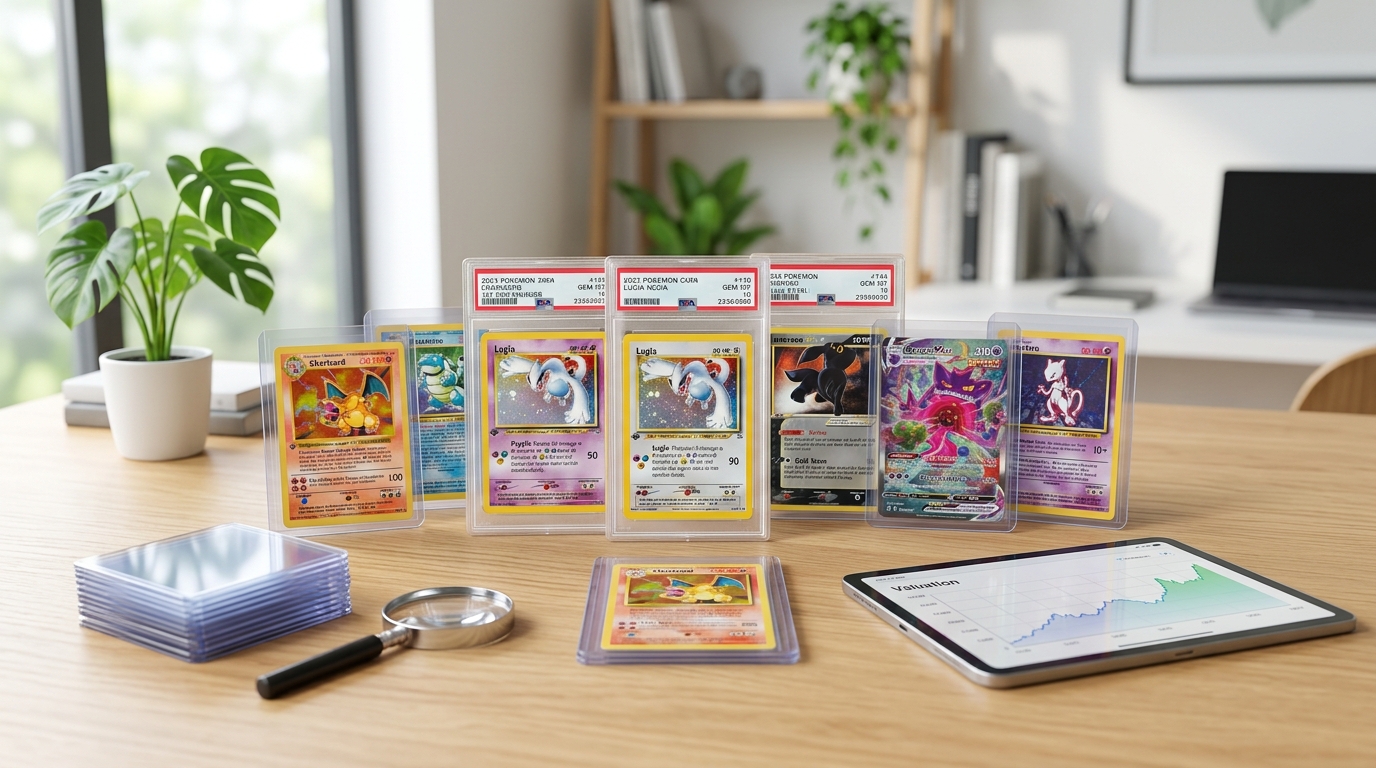
If you want to know how to sell pokemon cards for maximum value without getting scammed, you need a clear, professional strategy. The trading card market has evolved from a schoolyard hobby into a multi-million dollar global asset class. Rare holographic cards like the Base Set Charizard or modern Special Illustration Rares can command hundreds, or even thousands, of dollars. However, navigating the selling process can be overwhelming for beginners and seasoned collectors alike. Whether you are looking to liquidate a childhood collection, flip modern booster boxes, or sell graded singles, this guide provides a step-by-step roadmap to get the best return on your investment.
Key Takeaway: Successfully selling Pokémon cards requires understanding your collection’s composition, accurately identifying individual card prints, objectively grading physical conditions, and selecting the optimal sales platform to minimize transaction fees.
Understanding the Market: Why Sell Pokémon Cards Now?
Before diving into listing your cards, it is helpful to understand the dynamics of the trading card game (TCG) market. The secondary market is driven by nostalgia, rarity, aesthetic appeal, and competitive playability.
The Rise of Pokémon TCG Collectibility
Pokémon is the highest-grossing media franchise of all time. Since the original Wizards of the Coast (WotC) print runs in 1999, the game has captured the attention of multiple generations. During the boom of the early 2020s, prices skyrocketed as high-profile collectors and investors entered the space. Today, the market has stabilized, but high-end vintage cards and rare modern illustrations continue to hold strong market values.
Identifying Your Target Buyers
Your target buyer depends on what type of cards you are selling:
- Nostalgic Collectors: These buyers look for vintage cards (1999–2003) to complete their childhood sets. They care deeply about card condition and centering.
- Modern Art Collectors: These collectors focus on full-art Supporter cards, Illustration Rares, and Gold Secret Rares. They value clean aesthetics and low pull rates.
- Competitive Players: Players need specific cards to build tournament-winning decks. They prioritize card utility over visual grade and often buy multiple copies of non-holographic cards.
- Bulk Buyers: Investors or store owners buy large quantities of common cards (bulk) at flat rates to sort, repackage, and resell.
Step-by-Step Guide: How to Sell Pokémon Cards for Max Value
To ensure you get the absolute best price for your collection, follow this four-step selling methodology.
Step 1: Catalog and Organise Your Collection
The first step is sorting your cards. Do not try to sell a messy binder or box. Sort your cards by set, rarity, and category (vintage vs. modern).
- Sleeves and Toploaders: Place any card that looks shiny or holographic into an acid-free penny sleeve immediately. If the card is worth more than $10, place it inside a rigid plastic toploader to prevent bending.
- Inventory Spreadsheet: For larger collections, create a simple spreadsheet tracking the card name, set number, condition, and estimated market price.
Step 2: Determine Your Pokemon Card Worth
You cannot sell your cards effectively if you do not know their current valuation. Always base your prices on completed market transactions.
- Check Sold Listings: Go to online platforms and filter by completed, sold listings. This prevents you from pricing your cards based on unrealistic asking prices. For a detailed breakdown of how to lookup set symbols and read card numbers, read our guide on how to check your pokemon card worth to avoid common pricing traps.
- Use Pricing Databases: Standardize your research using reputable price guides. TCGPlayer is the industry gold standard for raw English cards, while PriceCharting is excellent for tracking historical price trends of graded items.
Step 3: Assess the Physical Condition
The physical condition of a card is the single most important factor determining its final sale price. A tiny scratch on a holographic surface or whitening on the card’s back edges can drop the value by 50% to 90%.
- The Grading Scale: Learn the difference between Gem Mint (PSA 10), Near Mint (NM), Lightly Played (LP), Moderately Played (MP), and Heavily Played (HP).
- Professional Grading: If you own a high-value vintage card or a rare modern card in flawless condition, submitting it for professional card grading can significantly boost its value and make it easier to sell to collectors.
Step 4: Protect and Package Your Cards
Shipping cards safely is critical to maintaining your reputation as a seller. If a card gets damaged during transit, you will be forced to refund the buyer and lose your item.
- Double Protection: Always place the card in a penny sleeve, then insert it into a rigid toploader.
- Prevent Sliding: Tape a small piece of paper over the top of the toploader (creating a pull tab) to prevent the card from slipping out during shipping, but never tape the card directly.
- Cardboard Sandwich: Place the toploadered card between two pieces of cardboard and secure them with painter’s tape. This prevents the card from being bent by postal sorting machines.
- Bubble Mailer: Ship the card in a padded bubble envelope with tracking. Never send valuable cards in a plain white envelope (PWE) without tracking.
Best Platforms: Where to Sell Pokémon Cards
There is no single best place to sell cards; the right platform depends on your goals, the value of the cards, and how much time you want to spend.
1. Online Marketplaces (eBay, TCGPlayer)
These platforms offer the largest audience of active buyers, but they come with seller fees.
- eBay: The largest global marketplace for trading cards. Ideal for selling individual rare singles, graded slabs, and complete collections. Fees are typically around 13% of the sale price.
- TCGPlayer: The largest dedicated card marketplace in the United States. Great for listing large quantities of raw cards. It uses a structured catalog system, so you do not need to take photos of every low-value card.
2. Local Card Shops (LCS) and Conventions
If you want cash immediately and want to avoid shipping logistics, local options are excellent.
- Local Stores: Keep in mind that local card shops have business overhead and need to make a profit. They will typically offer 50% to 70% of market value in cash, or 70% to 80% in store credit.
- Conventions: Card shows and regional tournaments are great places to trade or sell. Dealers are active buyers, and you can negotiate face-to-face.
3. Direct Peer-to-Peer Selling (Facebook Groups, Discord)
Selling directly to other collectors allows you to bypass marketplace fees entirely.
- Facebook Groups: Search for local or national Pokémon buying and selling groups. Transactions are usually handled via PayPal Goods & Services (G&S) to protect both parties.
- Subreddits & Discord: Communities like r/pkmntcgtrades have strict feedback systems that make peer-to-peer trading relatively safe.
| Selling Method | Average Payout (% of Market Value) | Processing Time | Seller Fees | Convenience |
|---|---|---|---|---|
| eBay / TCGPlayer | 80% – 87% | Moderate (1-2 weeks) | 13% – 15% | Moderate (Requires shipping) |
| Local Card Shop (Cash) | 50% – 60% | Instant | None | High (No shipping needed) |
| Local Card Shop (Credit) | 70% – 80% | Instant | None | High (Ideal for trades) |
| Peer-to-Peer (FB/Discord) | 90% – 95% | Fast (1-3 days) | 3% (PayPal G&S) | Low (Requires finding buyers) |
Crucial Mistakes to Avoid When Selling Cards
Avoid these common pitfalls to protect your profits and avoid disputes with buyers:
Mistake 1: Ignoring Shipping and Fee Calculations
A common mistake is pricing cards without factoring in shipping costs and platform fees. If you sell a card for $5, but shipping costs $4 and eBay takes $1 in fees, you have made zero profit. For lower-value cards, bundle them into lots or list them on TCGPlayer where shipping can be combined. For general pricing strategies, you can read our guide on how to price sports cards for selling to see how transaction-based pricing is crucial in the hobby world.
Mistake 2: Falling for Scams and Counterfeits
As card values have risen, counterfeiting has become extremely common. If you purchase or accept a fake card in a trade, you will lose your investment when trying to sell it. Learn how to inspect fonts, foil patterns, and card stock quality. Read our guide on how to spot a fake sports card and trading cards to protect your transactions.
Mistake 3: Overpricing Raw (Ungraded) Cards
Many sellers look at PSA 10 (Gem Mint) graded prices and assume their raw, ungraded card is worth the same amount. Raw cards are almost never valued at graded prices. Even a card straight from a booster pack is typically valued at Near Mint (raw) pricing, which is a fraction of the PSA 10 value. Be realistic about your card’s condition and price it accordingly.
How CardMint Automates Your Selling Workflow
If you have a large stack of cards, looking up each one manually on eBay or TCGPlayer takes hours. CardMint is designed to eliminate this friction using advanced mobile technology.
- AI Scan Recognition: Open CardMint, point your camera at any card, and the app instantly recognizes the card name, set symbol, card number, and print run.
- Live Price Aggregator: The app pulls real-time completed sales and market price trends from eBay, TCGPlayer, and PriceCharting, giving you an accurate valuation in seconds.
- AI Pre-Grading Check: Before spending money on professional grading, CardMint’s camera scanner analyzes the card’s centering, edges, and surface quality to project an estimated grade.
- Collection Manager: Save your scanned cards into a digital inventory list. You can track the total value of your collection over time and export the catalog directly to CSV to list on marketplaces.
Frequently Asked Questions
What is the best place to sell Pokemon cards?
The best place to sell high-value singles is eBay, which offers the largest audience. For lower-value bulk cards and standard holographic cards, TCGPlayer is more efficient. If you want cash instantly and want to avoid shipping, look for a local card shop (LCS) or a regional card convention.
How much do local card shops pay for Pokemon cards?
Local card shops typically pay 50% to 60% of the card’s current market value in cash. If you choose store credit, they will often pay 70% to 80%. This discount covers their business overhead, sorting labor, and retail profit margin.
Should I grade my Pokemon cards before selling them?
Grading only makes sense if the card is high value and in near-perfect condition. A raw card worth $50 might be worth $500 if it receives a PSA 10 Gem Mint grade, but it could be worth only $40 if it receives a PSA 6. Use CardMint’s AI pre-grader to check your card’s condition before submitting it to PSA or BGS.
How do I safely ship a Pokemon card?
To ship a card safely, place it in a soft plastic penny sleeve, insert it into a rigid plastic toploader, and tape a piece of cardboard on both sides of the toploader to prevent bending. Place the assembly inside a padded bubble mailer and ship it with tracking. Avoid sending expensive cards in a standard letter envelope.
What are bulk Pokemon cards and how do I sell them?
Bulk refers to the common, uncommon, and non-holographic rare cards that have minimal individual value. You can sell bulk in large lots (usually 1,000 cards) on eBay, or sell them directly to online hobby stores that pay flat rates per card (typically 0.5 to 1 cent per common card).
How do I avoid scams when selling Pokemon cards online?
Always ship your cards using a method that includes tracking, and only ship to the buyer’s verified address. For direct peer-to-peer sales, always use PayPal Goods & Services (G&S) rather than Friends & Family (F&F), as G&S offers buyer and seller protection in case of disputes.
Pre-Grade & Track Values Instantly with CardMint
CardMint is the ultimate all-in-one scanner for sports card and TCG collectors, saving you time and money.
Simply scan the front of your card. Our AI instantly identifies the card details, checks current pricing metrics, and gives you a centering and wear pre-grade report before you submit to PSA/BGS.
