
How to Store Baseball Cards: Collector's Safety Guide
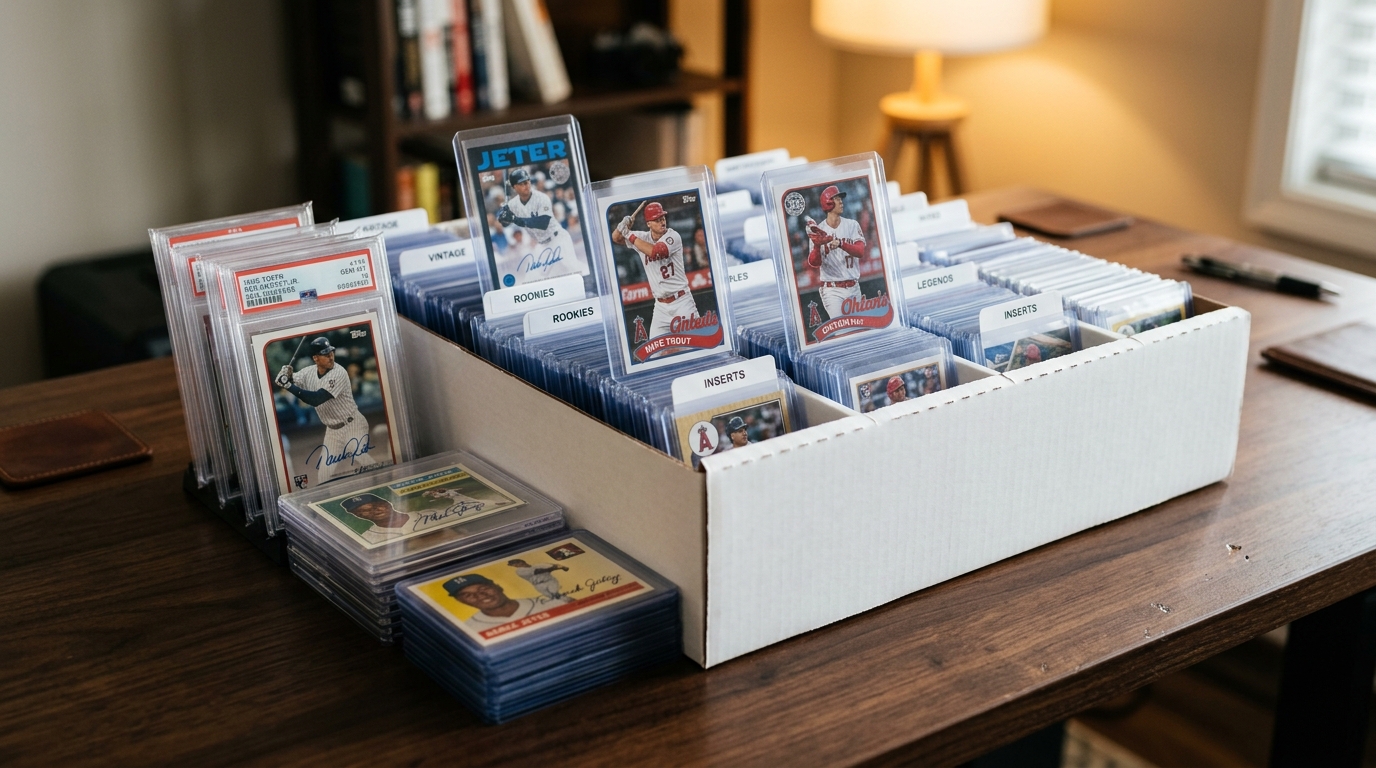
If you want to protect your collection and maintain its long-term value, knowing how to store baseball cards properly is one of the most critical skills to master as a collector. Trading cards are made of organic paperboard, glossy coatings, metallic foils, and highly sensitive inks. Without proper storage, these materials are vulnerable to environmental degradation, physical damage, and handling wear that can permanently destroy their secondary market value.
In this comprehensive guide, we will break down the essential storage tools every collector needs, explain how to establish climate control, and provide step-by-step instructions for preserving your cards so they remain in pristine, gem-mint condition.
Why Card Storage Matters for Value Preservation
The condition of a baseball card dictates its financial value in the modern hobby. Professional grading companies like PSA, BGS, and SGC grade cards on a strict 1-to-10 scale. A single microscopic scratch on the surface, a soft corner, or a slight bend can reduce a card’s grade from a Gem Mint 10 to a Near-Mint 7.
When you learn the details of sports card value, you quickly discover that the price difference between grades is exponential. For example, a rookie card that sells for $5,000 as a PSA 10 might only command $300 as a PSA 8. Storing your cards correctly prevents the physical degradation that causes these catastrophic drops in value.
Furthermore, properly preserved cards are far easier to evaluate. If you are preparing to submit your cards for AI card grading or traditional grading, keeping them flat, dry, and clean ensures you get the highest possible return on investment.
Top Essential Tools for Baseball Card Storage
To store your cards safely, you must use materials specifically designed for archival preservation. Never use generic household items like rubber bands, paper clips, or plastic wrap. Here are the professional tools you should use.
Penny Sleeves
Penny sleeves are soft, clear bags made of acid-free, archival-safe polypropylene. They are the first line of defense for any trading card. A penny sleeve protects the delicate surface of the card from dust, moisture, skin oils, and minor abrasions. You should put every single card of value into a penny sleeve before placing it into any other holder.
Toploaders
Toploaders are rigid plastic sleeves made of polyvinyl chloride (PVC) or high-impact polystyrene. They provide structural rigidity, preventing cards from bending, folding, or getting creased when handled. Once a card is in a penny sleeve, you slide it into a toploader. Ensure you use the correct thickness (measured in points, such as 35pt, 55pt, 75pt, or 130pt) to avoid crushing thicker cards.
Semi-Rigid Card Holders
Semi-rigid holders, such as Cardboard Gold Card Savers, are slightly flexible plastic holders. They are thinner and lighter than toploaders and are highly recommended by grading companies. If you plan to submit your cards to PSA or BGS, you should store and ship them in semi-rigid card holders. They hold the card securely in place without allowing it to slide around during transit.
One-Touch Magnetic Cases
For your most valuable assets, such as high-end autographed cards or vintage rookie cards, one-touch magnetic cases offer premium protection. These cases feature a solid, rigid plastic design with a recessed interior cavity that matches the card’s dimensions. The case snaps together using a strong magnet at the top. They protect cards from bending, impact, and physical handling, and many modern versions include UV-blocking additives.
Storage Binders
Binders are excellent for set builders and collectors who enjoy flipping through their collections. However, you must choose your binder carefully. Avoid cheap three-ring binders from office supply stores; the metal rings can easily pinch and destroy cards. Instead, buy premium, side-loading, zipper binders that feature built-in, acid-free pages. Ensure the binder pages are PVC-free and have backing sheets to prevent cards from sliding.
Card Storage Boxes
To store large volumes of sleeved and toploader-protected cards, use specialized storage boxes. Standard corrugated cardboard boxes designed for trading cards (like 2-row, 3-row, or 4-row shoe boxes) are inexpensive and highly effective. For ultimate protection, you can invest in heavy-duty plastic storage cases, such as Pelican cases or fireproof lockboxes, which safeguard cards from water, fire, and impact damage.
Step-by-Step Guide: How to Store Baseball Cards Safely
Preserving your collection requires a consistent routine. Follow these steps whenever you are sorting, sleeving, or archiving new cards.
Step 1: Prepare Your Workspace
Before touching your cards, wash and dry your hands thoroughly. Natural skin oils, sweat, and dirt can easily transfer to the card surfaces, leaving permanent fingerprints or smudges. Work on a clean, flat, and spacious surface. Using a clean neoprene playmat is highly recommended as it provides a soft cushion that protects card corners if they are dropped.
Step 2: Put the Card in a Penny Sleeve
Carefully insert the card into a penny sleeve. To avoid catching and dinging the corners of the card, gently pinch the sides of the sleeve to open it up before sliding the card in. Some collectors like to cut a tiny diagonal slit in one of the top corners of the sleeve to make insertion even easier. Ensure the card slides all the way to the bottom.
Step 3: Insert into the Rigid Holder
Hold the sleeved card by its edges and slide it gently into a toploader or semi-rigid holder. Never force the card down, as this can bend the edges or damage the top border. If the card does not slide down easily, tap the bottom of the toploader gently on a flat surface to let gravity guide the card into place.
Step 4: Arrange in Your Storage Box
Store your toploaded cards vertically inside your storage box. Do not lay them flat on top of one another, as the weight of stacked cards can create excessive pressure, potentially sticking the card surfaces together or causing warping. Use foam dividers or card separators to keep the rows snug but not overly compressed.
Environmental Control: Climate, Humidity, and Light
Even if your cards are in premium plastic holders, environmental factors can slowly destroy them over time. You must control the environment in your storage area.
Humidity Controls
High humidity is one of the greatest enemies of paper collectibles. It causes cardboard to absorb moisture, leading to warping, curling, and mold growth. In high-humidity environments, the glossy coating on modern cards can soften, causing them to stick to the plastic sleeves—a phenomenon known as “bricking.” Maintain a relative humidity level between 35% and 50%. You can monitor this with a cheap hygrometer. Place silica gel packets inside your card storage boxes to absorb excess moisture.
Temperature Guidelines
Keep your cards in a temperature-controlled room. The ideal storage temperature is between 60°F and 70°F (15°C to 21°C). Avoid storing your collection in attics, basements, or garages, as these spaces experience extreme temperature fluctuations. Heat can dry out the paperboard, making it brittle, and can cause plastic sleeves to off-gas chemicals.
UV Light Protection
Direct sunlight and UV radiation fade the vibrant inks on baseball cards and can turn clear plastic holders yellow and brittle. Always store your collection in a dark area, such as a closet, cabinet, or drawer. If you display your cards on shelves or walls, ensure they are placed away from windows and utilize UV-blocking frames or display cases.
Key Mistakes to Avoid When Storing Cards
To keep your collection safe, make sure you avoid these common collector mistakes:
- Using cheap vinyl pages: Older or low-quality binder pages made of soft PVC contain plasticizers that release acidic gases over time. This chemical reaction will eventually melt the card surface or leave a greasy residue. Always verify that your sleeves and pages are labeled “PVC-Free” and “Acid-Free.”
- Taping card holders closed: Avoid putting adhesive tape over the top openings of toploaders. The adhesive can transfer to the card when you slide it out, ruined its value. Use team bags or resealable sleeves to keep cards from falling out of toploaders instead.
- Stacking raw cards: Never stack unsleeved cards in piles. The friction between cards can scratch the delicate surface gloss, and humidity can fuse the stack into a solid brick.
- Storing cards on the floor: Keep storage boxes off the floor. If a pipe leaks or a room floods, boxes on the floor will be ruined instantly. Keep them on shelves or tables.
- Ignoring card thickness: Forcing a thick jersey patch card or memorabilia card into a standard 35pt toploader will pinch the edges and crease the card. Always measure your card thickness and use the appropriate holder size.
By establishing a solid preservation routine and utilizing the right tools, you will maintain the beauty, history, and financial value of your baseball cards for decades. If you have cards of players who feature official rookie designations, understanding what does RC mean and protecting those specific rookies is your best path to building a highly valuable sports card portfolio.
Frequently Asked Questions (FAQ)
What is the best way to store a large collection of baseball cards?
The most space-efficient and cost-effective way to store a large collection is to place cards in penny sleeves, insert them into toploaders (for valuable cards) or keep them raw (for low-value common cards), and arrange them vertically in multi-row corrugated cardboard storage boxes. Keep these boxes on sturdy shelves in a climate-controlled room.
Should I use binders or storage boxes for my baseball cards?
Use binders for complete sets, common cards, and insert sets that you want to browse frequently. For higher-value cards, rookie cards, and autographs, use individual sleeves and toploaders stored in secure cardboard or plastic storage boxes. Binders expose cards to more movement and potential handling damage.
How do I protect my cards from humidity?
To protect cards from humidity, keep them in a climate-controlled room with a dehumidifier if necessary. Place silica gel packets inside your card storage boxes to absorb any ambient moisture, and ensure all sleeves and holders are made of moisture-resistant materials like polypropylene.
Are older sports card binders safe for card storage?
Many older binders and vinyl pages contain polyvinyl chloride (PVC) and harmful plasticizers that degrade paper and ink over time. If you have cards stored in older binders, it is highly recommended to migrate them into modern, PVC-free, acid-free binder systems or toploaders to prevent long-term chemical damage.
Can card sleeves cause damage over time?
Sleeves made from standard archival-safe materials (such as polypropylene or polyethylene) will not damage cards. However, cheap sleeves made with PVC or sleeves that are too tight for the card’s thickness can pinch corners and scratch surfaces. Always use high-quality, brand-name sleeves.
Is it safe to stack cards vertically?
Yes, storing cards vertically (upright like books on a library shelf) is the safest method. This prevents the weight of the cards from compressing the surface coatings under high pressure, which avoids warping and stops card surfaces from sticking together in humid conditions. Keep them reasonably snug in the row but not packed tightly.
Pre-Grade & Track Values Instantly with CardMint
CardMint is the ultimate all-in-one scanner for sports card and TCG collectors, saving you time and money.
Simply scan the front of your card. Our AI instantly identifies the card details, checks current pricing metrics, and gives you a centering and wear pre-grade report before you submit to PSA/BGS.
