
What Does RC Mean on a Sports Card? Collector's Guide
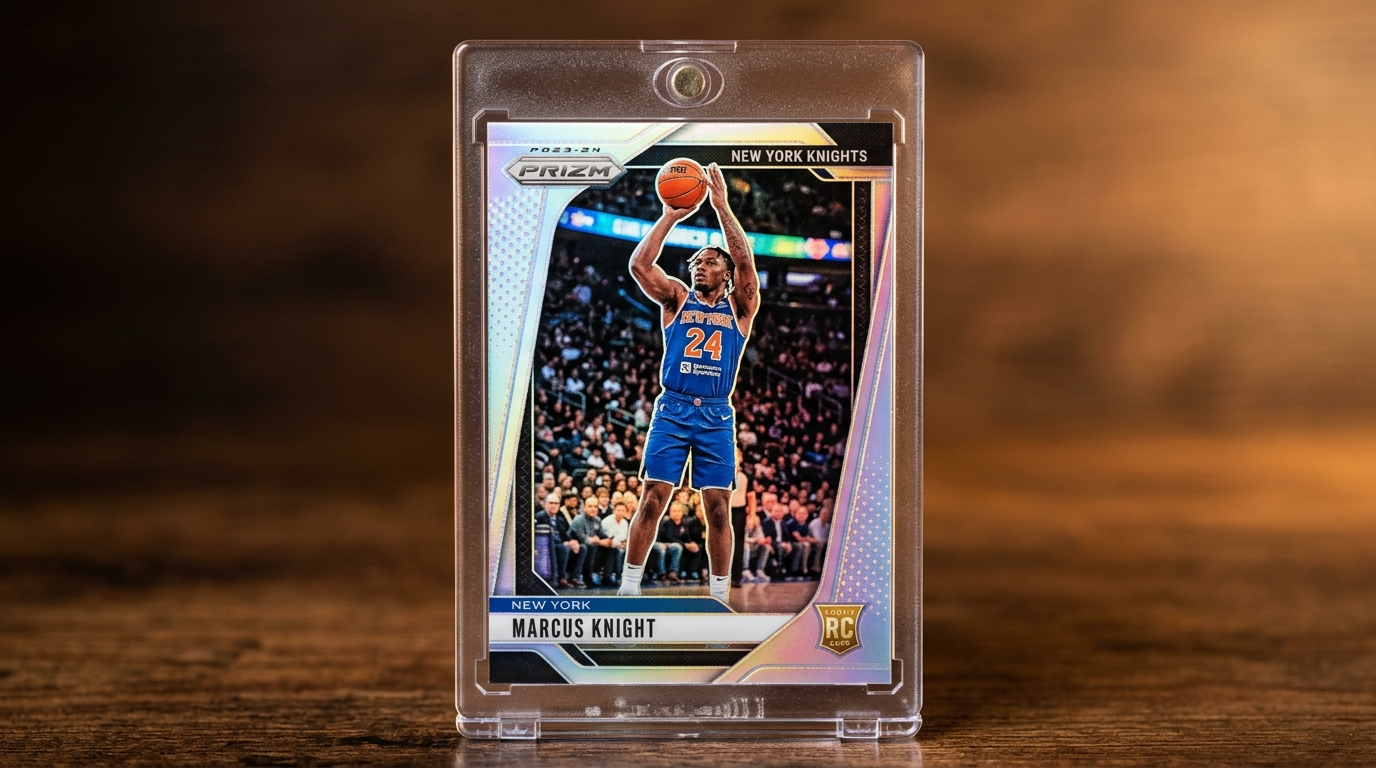
If you are a collector or a beginner entering the hobby, you have likely asked yourself what does rc mean on a sports card when browsing eBay listings, checking graded slabs, or looking at card corners. In the sports card collecting community, the letters “RC” signify a Rookie Card, which is one of the most important classifications for card valuation, historical significance, and collector demand.
This comprehensive guide will explain everything you need to know about the RC stamp: what it represents, how it is standardized across major sports, the history of rookie cards, the key difference between rookie and prospect cards, and why these items command such a massive price premium in the secondary market.
Key Takeaway: “RC” stands for Rookie Card. It denotes a player’s first officially licensed card from their debut professional season within a licensed card brand’s main base set.
The Definition of a Rookie Card
Before we dive into the history, let’s establish the modern criteria. Under the guidelines established by the major sports leagues and card manufacturers, a true Rookie Card (RC) must meet specific requirements:
- Licensed Product: The card must be produced by a manufacturer licensed by both the respective player’s association (e.g., MLBPA, NBPA, NFLPA) and the league itself (e.g., MLB, NBA, NFL).
- Main Base Set: The card must be part of a widely distributed, main base set. Subsets, inserts, and special parallel-only cards generally do not count as the player’s primary rookie card, though parallel versions of the base card (like refractors or Prizms) inherit the rookie card status.
- Official Logo: For cards produced in 2006 and later, the card must feature the official “RC” shield logo (or the brand-specific equivalent) on the front of the card.
Understanding these criteria is essential because the market distinguishes heavily between a player’s official Rookie Card and their other early-career collectibles. A true rookie card serves as the baseline for a player’s entire secondary market value.
The 2006 Standardization Rule: Why It Happened
Before 2006, the term “rookie card” was loosely defined. Card manufacturers were engaged in what collectors call the “rookie card wars” of the late 1990s and early 2000s. To capture market share, brands like Topps, Upper Deck, Fleer, and Donruss printed rookie cards of players who were still in the minor leagues, in college, or even in high school.
This caused several issues:
- Over-saturation: A single player could have dozens of different “rookie cards” spread across multiple years, confusing buyers, and diluting the value.
- Premature Printing: Players who never made it to the major leagues had official “rookie cards” printed, while players who debuted years later already had cards that were several years old.
- Lack of Consistency: Different price guides and collectors disagreed on which card was a player’s “true” rookie.
To restore order, Major League Baseball (MLB) and the Major League Baseball Players Association (MLBPA) collaborated with card manufacturers in 2006 to introduce the official Rookie Card rules. Under this agreement:
- A player could not have an official Rookie Card in a MLB-licensed product until they were actually added to the team’s active roster (or 40-man roster under certain exceptions).
- All cards meeting this debut-season requirement had to carry a standardized “RC” logo on the front.
- Cards printed before a player’s debut season were classified as “Prospect” cards and could not feature the RC logo (instead using indicators like “1st Bowman” or “Prospect”).
This rule was later adopted in spirit and logo format across other sports, bringing a much-needed structure to the sports card hobby.
Why Rookie Cards Command a Price Premium
Rookie cards consistently hold and grow in value much better than veteran cards of the same player. If you look at a legendary player like LeBron James, Michael Jordan, or Tom Brady, their rookie cards sell for astronomical figures compared to their cards from years two, ten, or their final season.
This price premium is driven by several fundamental factors of hobby economics:
1. Fixed Printing Supply
A player’s rookie cards are only printed during their debut season. Once that production year is over, the print runs are locked forever. While manufacturers can print thousands of new veteran cards for a player year after year throughout their career, they can never go back and print more rookie cards. As a player’s legacy grows, the demand for their rookie card increases, but the supply remains static. This classic supply-and-demand mismatch pushes prices upward.
2. Collector Sentiment and the “First-Ever” Appeal
Human psychology plays a massive role in collecting. Owning a rookie card is equivalent to owning a piece of a player’s origin story. It captures the raw potential of their entry into the league. Collectors who build “player runs” (collecting one of every card of a specific player) prioritize the rookie card as the crown jewel of their collection.
3. Professional Grading Standards
Modern sports card valuation is heavily dependent on professional grading. Companies like PSA (Professional Sports Authenticator), BGS (Beckett Grading Services), and SGC place an “RC” designation on the grading label. A rookie card graded in gem mint condition (PSA 10 or BGS 9.5) commands an exponential premium over a raw, ungraded version. For a deep dive into how grading works and why condition is so critical, check out our guide on AI card grading and condition analysis.
Rookie Cards vs. Prospect Cards
One of the most common pitfalls for beginning collectors is failing to distinguish between a Rookie Card and a Prospect Card. This distinction is especially critical in baseball card collecting, which has a highly structured pipeline for young players.
Let’s look at the primary differences between the two categories:
| Feature | Prospect Card | Rookie Card (RC) |
|---|---|---|
| League Level | Minor League / College / Draft | Major League (NFL, NBA, MLB) |
| Player Status | Has not yet debuted in the majors | Has made the active major league roster |
| Logo/Badge | “1st Bowman”, “Prospect”, or no logo | Official “RC” Shield Logo |
| Release Year | Years prior to professional debut | The player’s official debut season |
| Purpose | Speculative investing on future potential | Core rookie collectible of a proven major-leaguer |
The “1st Bowman” Phenomenon
In baseball, Bowman (a brand owned by Topps) prints cards of minor league prospects. The very first card a player has in a Bowman set is marked with a “1st Bowman” logo.
Even though these are prospect cards and do not feature the “RC” logo, the hobby treats a player’s 1st Bowman Chrome Autograph as their most valuable and desirable card overall. Collectors view it as the absolute first licensed card of the player. However, it is still classified as a prospect card. When the player finally debuts in the major leagues, they will receive their official Topps Rookie Card featuring the “RC” logo. A well-rounded collection often includes both the 1st Bowman (the prospect card) and the Topps Chrome (the rookie card).
Understanding Key Rookie Card Variations
Modern sports cards are far more complex than the vintage cardboard of the past. When a player has a rookie card, it is rarely just one card. Instead, there is a hierarchy of variations that collectors chase.
1. Base Rookie Cards
The base rookie card is the standard card found in the set’s checklist. It is usually printed on paperboard or chromium stock. Examples include a base Panini Prizm Basketball rookie card or a Topps Baseball base rookie card. These are the most accessible and widely collected versions.
2. Rookie Parallels and Refractors
Parallels are identical in design to the base rookie card but feature different border colors, background patterns, or shiny metallic finishes.
- Refractors/Prizms: These cards catch the light to create a rainbow effect.
- Numbered Parallels: Many parallels are serial-numbered (e.g., “Serial Numbered 01/99”), indicating that only a specific number of those cards were ever printed. The lower the serial number, the higher the scarcity and value.
3. Rookie Patch Autographs (RPAs)
In modern football and basketball collecting, the Rookie Patch Autograph (RPA) is considered the holy grail. These cards feature:
- An authentic piece of a jersey worn by the player (ideally a multi-colored patch from the logo or numbers).
- An on-card signature hand-signed by the player.
- The official RC logo. Due to their scarcity and premium components, high-end RPAs from sets like National Treasures or Flawless can sell for tens of thousands (or even millions) of dollars.
4. Rookie Inserts
Inserts are cards with distinct designs that are themed and inserted into packs at specific odds (e.g., one insert per ten packs). While inserts printed during a player’s rookie year are popular, they do not carry the official “RC” logo because they are not part of the base checklist. They are referred to as “rookie-year inserts” rather than true rookie cards.
Evaluating Rookie Card Values
Not all rookie cards are created equal. An RC logo does not guarantee that a card will become valuable. When assessing the worth of a rookie card, collectors evaluate several key metrics:
- Player Performance: Real-world performance is the primary driver of value. If a player wins a Rookie of the Year award, an MVP, or a championship, their cards will skyrocket. If a player fades into obscurity, their rookie cards will lose nearly all their value.
- Brand Tier: High-end brands like Panini National Treasures, Bowman Chrome, and Topps Chrome carry much higher premiums than lower-end retail brands like Panini Hoops or Topps Opening Day.
- Card Condition: Scratches, soft corners, off-center printing, and surface indentations dramatically reduce a card’s value. Collectors use professional grading to certify condition. Learn more about valuing your items by reading our sports cards value and price guide.
- Autograph Authenticity: Autographed rookie cards command a massive premium over non-autographed versions, provided the autograph is authentic and certified. For advice on pricing and market analysis before selling, consult our guide on how to price sports cards for selling.
Vintage Rookie Cards (Pre-2006)
Because the official “RC” logo was not introduced until 2006, identifying rookie cards from the vintage era (pre-1980) and the “junk wax” era (late 1980s to late 1990s) requires a different approach.
For vintage cards, a card is recognized as a rookie card if it is from the first widely distributed, licensed set that features the player.
- 1986 Fleer Michael Jordan (#57): This is widely accepted as Michael Jordan’s true rookie card, despite him playing in the NBA since 1984. Why? Because Star Company produced cards in 1984 and 1985, but they were distributed through bags in limited quantities rather than traditional wax packs. The 1986 Fleer card was the first widely distributed base card available to the general public.
- 1952 Topps Mickey Mantle (#311): This is one of the most famous cards in existence. Technically, Mantle’s rookie card is the 1951 Bowman card. However, the 1952 Topps card is from his first year in a Topps set and is treated with the same prestige (and often higher value) as a true rookie card.
- 1989 Upper Deck Ken Griffey Jr. (#1): The premier rookie card of the modern era, marking the debut of Upper Deck’s high-quality anti-counterfeit holograms.
When buying vintage rookie cards, counterfeits are extremely common due to the high values involved. It is critical to inspect cards for authentic printing patterns, card stock, and centering. You can protect your investment by reviewing our guide on how to spot a fake sports card.
Frequently Asked Questions
Do older vintage cards have the RC logo?
No. The official “RC” shield logo was introduced in 2006. For vintage cards (pre-2006), a card is considered a rookie card if it was printed in the player’s first season in a widely distributed, licensed set.
Can a player have more than one Rookie Card?
Yes. A player can have multiple rookie cards across different licensed products released during their debut year. For example, in football, a player might have a Prizm Rookie Card, a Donruss Rookie Card, a Select Rookie Card, and a Contenders Rookie Card from the same season.
Does the RC badge automatically make a card valuable?
No. An RC stamp on a card of a player who has a mediocre or quiet career will not make the card valuable. The rookie status acts as a multiplier; it makes the card of an elite player extremely valuable, but it does not create value out of thin air for players who do not perform well on the field.
What is a Rookie Card Parallel?
A parallel is a variation of the base rookie card that features a different color border, foil stamping, or background texture. Common examples include Topps Gold Parallels (numbered to a specific print run) or Panini Prizm Silver Refractors. These cards feature the RC logo and are much rarer than the base versions.
What does “RPA” stand for?
RPA stands for Rookie Patch Autograph. It refers to a highly premium rookie card that contains both an authentic piece of player-worn jersey patch and an on-card autograph, in addition to the RC logo.
Are insert cards considered true Rookie Cards?
Generally, no. Even if an insert card is printed during a player’s rookie year, it is not considered a “true” rookie card because it is not part of the main base set checklist. It is classified as “rookie-year insert.”
What is a “1st Bowman” card?
A “1st Bowman” card is a player’s first card printed in a Bowman-branded set while they are still a prospect in the minor leagues. While it is highly valuable (especially the chrome autographed versions), it is technically a prospect card rather than an official Rookie Card.
Conclusion & Collector Advice
Understanding the meaning of the RC logo is a fundamental step for anyone looking to navigate the sports card market. The “RC” shield signifies a player’s official entry into the professional card market, making it the primary target for collectors and investors alike.
As you build your collection, remember these key tips:
- Focus on Quality over Quantity: A single, high-grade rookie card of a superstar is generally a better long-term investment than dozens of low-grade cards or cards of unproven players.
- Verify Authenticity: Always double-check vintage cards for counterfeits and ensure modern cards feature the proper licensing and official logos.
- Track the Market: Rookie card values fluctuate daily based on player performance, injuries, and overall market trends.
By mastering the differences between rookie cards, prospect cards, and parallels, you can make informed purchasing decisions and build a collection that holds its value for years to come.
Pre-Grade & Track Values Instantly with CardMint
CardMint is the ultimate all-in-one scanner for sports card and TCG collectors, saving you time and money.
Simply scan the front of your card. Our AI instantly identifies the card details, checks current pricing metrics, and gives you a centering and wear pre-grade report before you submit to PSA/BGS.
