
Most Valuable Pokemon Cards in 2026
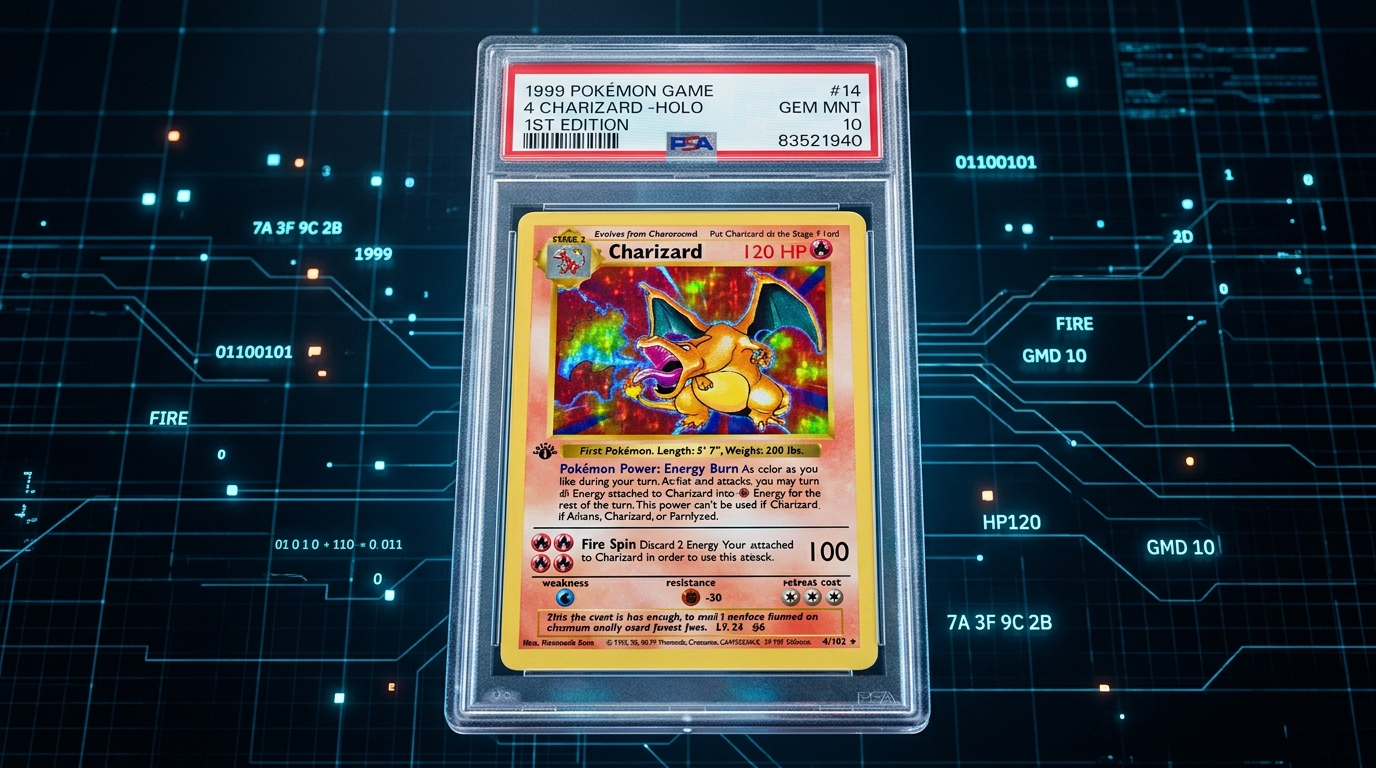
Finding the most valuable pokemon cards in today’s mature trading card market requires a deep understanding of print runs, historical grading ratios, and auction dynamics. Whether you have just unearthed a dust-covered binder from the late 1990s in your parents’ attic or you are actively bidding on six-figure collectibles at major auction houses, understanding the factors that separate a common trading card from an elite investment asset is critical to navigating the modern hobby.
The market for the Pokémon Trading Card Game (TCG) has undergone an extraordinary transformation over the past decade. What began as a playground phenomenon in 1996 has matured into a sophisticated alternative asset class, complete with professional grading registry standards, institutional investment portfolios, and record-shattering public auctions. Cards that could be bought for pocket change in the early 2000s now command prices comparable to high-end real estate and fine art. This guide takes you on a deep dive into the top most expensive Pokémon cards ever sold, explains how to identify rare cards within your own collection, and breaks down the core mechanics of card valuation.
Key Takeaway: The value of a Pokémon card is a direct function of its print population, promotional distribution history, and professional grading condition. A microscopic difference in centering or corner wear can impact a card’s market price by tens of thousands of dollars.
The Rise of Pokémon TCG as a Financial Asset
For many years, trading cards were dismissed as transient childhood fads. However, as the generation that grew up playing the game entered adulthood and gained disposable income, nostalgia collided with investor capital. The resulting boom, which reached a fever pitch between 2020 and 2022, structurally changed the hobby forever. Pokémon cards are no longer just cardboard toys; they are liquid collectibles with global appeal.
Several structural factors support this high-value ecosystem:
- Professional Grading Registries: Companies like the Professional Sports Authenticator (PSA), Beckett Grading Services (BGS), and Certified Guaranty Company (CGC) have introduced objective grading metrics. The creation of “set registries”—where collectors compete to build complete, highest-graded sets—has driven fierce bidding wars for the few remaining “Gem Mint” (PSA 10) copies of early cards.
- Global Media Dominance: The Pokémon Company is the highest-grossing media franchise of all time, outstripping Star Wars, Marvel, and Mickey Mouse. This massive cultural footprint ensures a continuous stream of new collectors entering the hobby, keeping demand high across both vintage and modern eras.
- Celebrity and Institutional Entry: High-profile acquisitions by public figures and investment funds have brought mainstream media attention to the TCG market. When multi-million dollar sales make headlines, it validates trading cards as a legitimate store of value, drawing in traditional art collectors and alternative asset investors.
The Anatomy of Valuation: Why Cards Become Holy Grails
Before exploring the individual cards, it is essential to understand the forces that drive a card’s price into the stratosphere. Pokémon card value is not arbitrary; it is governed by a specific set of variables:
1. Organic vs. Manufactured Scarcity
Vintage cards possess “organic scarcity.” In 1999, nobody was buying Base Set booster packs with the intention of keeping them in temperature-controlled safes. Children played with them, traded them on schoolyard concrete, and stuffed them unprotected into back pockets. Consequently, finding a vintage card in pristine condition is incredibly difficult.
In contrast, modern “manufactured scarcity” refers to cards printed in limited quantities but immediately placed in protective sleeves. While modern “Secret Rares” or “Alternate Arts” are rare pull rates, their survival rate in perfect condition is close to 100%. Therefore, vintage cards always carry a massive premium due to the sheer lack of high-grade survivors.
2. The Grading Delta
Condition is the single most powerful multiplier in card valuation. Grading scales run from 1 (Poor) to 10 (Gem Mint). For ultra-desirable cards, the price gap between consecutive grades is exponential rather than linear:
- A 1999 Base Set 1st Edition Charizard graded PSA 8 (Near-Mint/Mint) might sell for around $8,000.
- The same card in a PSA 9 (Mint) slab can fetch $25,000.
- A pristine PSA 10 (Gem Mint) copy can cross $420,000.
This steep curve exists because collectors are willing to pay an astronomical premium for perfection, especially when completing top-ranked registry sets.
3. The “Charizard Effect” and Character Popularity
Not all Pokémon are created equal. Even if a Blastoise, Venusaur, and Charizard have the exact same print run and pull rates in the Base Set, Charizard will always command a multi-fold premium. This character bias is driven by the anime’s portrayal of Charizard as the ultimate, rebellious powerhouse, cementing it as the mascot of childhood power and prestige.
Detailed Profiles of the Most Valuable Pokémon Cards
While millions of cards have been printed, only a select group has achieved legendary status. These are the crown jewels of the hobby.
1. 1998 Pikachu Illustrator (CoroCoro Comic Promo)
- Est. Market Value: $5,275,000
- Why it is valuable: This is the absolute king of the TCG world. Rather than being distributed in booster packs, the Pikachu Illustrator card was awarded to winners of the Japanese CoroCoro Comic Illustration Contests in 1997 and 1998. Winners received a copy of the card featuring unique artwork by Atsuko Nishida, the original creator of Pikachu.
- Population Data: Only 39 copies were officially awarded, with an additional 2 copies surfacing later, bringing the total known population to 41. Out of these, only one copy has ever achieved the elusive PSA 10 Gem Mint grade. In 2022, influencer Logan Paul acquired this sole PSA 10 copy in a private trade valued at $5.27 million (involving a PSA 9 copy plus $4 million cash), setting a Guinness World Record.
- Collector Insights: Because it is a Japanese promo, the card has a unique layout. The word “Illustrator” is written at the top instead of “Trainer,” and the expansion symbol in the bottom right corner is a pen icon. Due to its astronomical value, counterfeits of this card are highly sophisticated; verifying paper stock, ink patterns under a loupe, and holographic foil distribution is vital.
2. 1999 Base Set 1st Edition Shadowless Charizard (PSA 10)
- Est. Market Value: ~$420,000
- Why it is valuable: The 1st Edition Shadowless Charizard is the undisputed holy grail of the Western Pokémon market. It represents the absolute pinnacle of early childhood nostalgia. The card features the artwork of Mitsuhiro Arita and is iconic for its “Shadowless” design—a brief printing window where the yellow border surrounding the art box lacked the drop shadow found on later, mass-produced “Unlimited” prints.
- Population Data: Out of thousands of copies submitted to PSA over the past 27 years, fewer than 125 have ever been awarded the coveted PSA 10 Gem Mint grade.
- Collector Insights: Finding a clean copy is incredibly tough due to early print line defects on the holofoil. When evaluating this card, look closely at the left border below the art box for a circular “1st Edition” stamp. Additionally, ensure it features the correct copyright string at the bottom: “©1995, 96, 98, 99 Wizards.” The presence of the “99” copyright is a classic indicator of a true shadowless print.
3. 1998 Blastoise Commission Presentation (CGC 8.5)
- Est. Market Value: ~$360,000
- Why it is valuable: Before Wizards of the Coast officially launched the English-language version of the TCG in North America, they produced test-print presentation cards to pitch the concept to Nintendo executives. These cards featured a blank back and used artwork from early Japanese releases.
- Population Data: Only two copies of the Blastoise Commission Presentation card are confirmed to exist. In January 2021, one of these copies, graded CGC 8.5, sold at auction for $360,000.
- Collector Insights: This card is technically a pre-production prototype, meaning it lacks the standard Pokémon card back design. Its blank back and historical significance make it a museum-quality piece that rarely enters public commerce.
4. 1997/1998 Trophy Pikachu (No. 1, No. 2, & No. 3 Trainer Cards)
- Est. Market Value: $150,000 – $350,000 (depending on placement and condition)
- Why they are valuable: These cards were the top prizes at the earliest official Pokémon tournaments held in Japan, including the Lizard Tournament and the Blastoise Mega Battle. The No. 1 Trainer card was given to first-place winners, the No. 2 Trainer to second place, and the No. 3 Trainer to third.
- Population Data: Produced in double-digit numbers per event, these cards are among the rarest tournament items in existence.
- Collector Insights: The artwork, drawn by Mitsuhiro Arita, depicts Pikachu joyfully holding a gold, silver, or bronze trophy. These cards are highly sought after by completionist collectors who view them as historical monuments of the competitive TCG scene.
5. 1999 Super Secret Battle No. 1 Trainer (PSA 10)
- Est. Market Value: ~$90,000 – $156,000
- Why it is valuable: This promotional Trainer card was awarded to regional champions of the Japanese “Super Secret Battle” tournament in 1999. The final match was held at a secret location, and regional winners had to present this card to gain entry.
- Population Data: PSA has graded only a handful of copies of this card, and it is estimated that fewer than 10 pristine copies exist.
- Collector Insights: The card features a holographic silhouette of Mewtwo against a cosmic background, designed by Hideki Kazama. Because it represents a highly exclusive “secret” event in early Pokémon history, its mystique commands a major premium among vintage Japanese collectors.
6. 1999 Family Event Kangaskhan Parent/Child Promo (PSA 10)
- Est. Market Value: ~$150,000
- Why it is valuable: In 1998, Japan hosted the Parent/Child Mega Battle tournament. Instead of individual players, teams composed of a parent and a child competed together. Teams that achieved a specific number of wins were awarded this rare promotional Kangaskhan card.
- Population Data: There are fewer than 50 graded copies in existence, and PSA 10 copies are exceedingly rare.
- Collector Insights: What makes this card special is the expansion logo in the bottom right corner—it features the original pocket monster set symbol, which was rarely used on promos. The artwork depicts Kangaskhan with its baby in its pouch, reflecting the family nature of the tournament.
7. 2000 Neo Genesis 1st Edition Holographic Lugia (PSA 10)
- Est. Market Value: ~$144,000
- Why it is valuable: The transition from the Base Set to the Neo era introduced Neo Genesis. The holographic Lugia (Card #9) is the face of this generation. Despite not being a promo, it is legendary among collectors for its extreme grading difficulty.
- Population Data: Out of more than 3,000 submissions to PSA, only about 40 copies have ever received a PSA 10 grade.
- Collector Insights: The card was plagued by factory print line issues, off-centering, and poor paper stock choices that made it highly susceptible to edge wear. A raw copy may only cost a few hundred dollars, but the PSA 10 version is a six-figure grail due to this massive condition scarcity.
8. 2005 Umbreon Gold Star (Play Promo)
- Est. Market Value: ~$70,000 – $90,000
- Why it is valuable: During the EX era of the TCG, Gold Star cards were introduced, featuring alternate artwork where the character’s body parts extended past the card frame. The Umbreon Gold Star was not available in standard packs; it was awarded to members of the Japanese Pokémon Players Club who accumulated 70,000 experience points through tournament play and league activities.
- Population Data: Accumulating 70,000 points was an immense grind, meaning very few players ever qualified to receive this card.
- Collector Insights: The dark background artwork makes the edges of this card highly vulnerable to showing minor whitening. Finding a copy with perfectly clean borders is one of the toughest challenges for Eeveelution collectors.
9. 1998 University Magikarp (Tamamushi University Promo)
- Est. Market Value: ~$50,000 – $66,000
- Why it is valuable: Distributed during a special promotion by Tamamushi University in Japan. School children had to complete a series of academic tests published in Japanese magazines and mail them back. Those who passed were invited to a special two-day tournament, and winners received this Magikarp card.
- Population Data: It is estimated that only 1,000 copies were originally printed, but only a fraction survived in high grade.
- Collector Insights: The card features Magikarp performing the move “Dragon Rage,” which it cannot typically learn in the video games. This quirky detail, combined with the academic entrance test backstory, gives the card a highly unique placement in TCG lore.
10. 2004 Rayquaza Gold Star (EX Deoxys #107/107)
- Est. Market Value: ~$40,000 – $60,000
- Why it is valuable: This is the most valuable pack-pulled card from the EX era. Rayquaza Gold Star has a pull rate of approximately 1 in every 144 booster packs, making it incredibly scarce even at the time of release.
- Population Data: Graded copies in PSA 10 condition are highly prized due to the fragile foil surfaces and poor centering common in the EX Deoxys print runs.
- Collector Insights: Rayquaza is depicted in its shiny form (black instead of green), which drives massive demand among competitive players and collectors alike.
| Card Name | Year | Grading Standard | Est. Market Value | Scarcity Factor |
|---|---|---|---|---|
| Pikachu Illustrator | 1998 | PSA 10 | $5,275,000 | CoroCoro Promo (Only 1 in PSA 10) |
| Base Set 1st Edition Charizard | 1999 | PSA 10 | $420,000 | Shadowless vintage printing |
| Blastoise Presentation Card | 1998 | CGC 8.5 | $360,000 | WotC prototype (Only 2 known) |
| Trophy Pikachu No. 1 Trainer | 1997 | Raw / Graded | $150,000 - $350,000 | Early tournament winner prizes |
| Kangaskhan Parent/Child Promo | 1999 | PSA 10 | $150,000 | Family tournament trophy card |
| Neo Genesis 1st Edition Lugia | 2000 | PSA 10 | $144,000 | Severe print line condition rarity |
| Super Secret Battle No. 1 Trainer | 1999 | PSA 10 | $90,000 - $156,000 | Hidden location tournament entry card |
| Umbreon Gold Star | 2005 | PSA 10 | $70,000 - $90,000 | Japanese Players Club 70k point prize |
| University Magikarp | 1998 | PSA 10 | $50,000 - $66,000 | School magazine exam prize |
| Rayquaza Gold Star | 2004 | PSA 10 | $40,000 - $60,000 | Pack-pulled EX Deoxys ultra-rare |
How to Identify and Authenticate Rare Cards
If you have a collection of older cards, you do not need to guess their rarity. Inspecting your cards for specific visual features can immediately reveal if you are holding a high-value collectible:
1. The 1st Edition Stamp
This is the most critical text marker. Vintage English cards from the Base Set through Neo Destiny feature a small circular black stamp on the left side of the card, just below the artwork window.
- Thick vs. Thin Stamps: Collectors distinguish between a “thick” stamp (where the number ‘1’ is thick and bold) and a “thin” stamp. Thick stamps are generally more valuable as they represent the earliest phase of the 1st Edition print run.
- Grey Stamps: During printing, the black ink rollers occasionally ran low, resulting in a faded grey stamp. These “grey stamp” error cards carry a significant premium among error specialists.
2. Shadowless Borders
If you have a Base Set card, look at the right-hand border of the character illustration window.
- If there is a drop shadow behind the border, it is an Unlimited copy (highly common).
- If there is no shadow (the border is flat yellow), it is a Shadowless copy (rare).
- Additionally, check the copyright date at the bottom: shadowless cards include “99” in the copyright string, whereas unlimited cards do not.
3. Holographic Swirls
In early “Cosmos” foil patterns, the holographic layer contains circular galaxy shapes. Occasionally, the foil placement aligns so that a circular “swirl” appears in the background. While not an official print variant, many collectors pay a 10% to 20% premium for cards containing clean swirls, especially near the character’s mouth or hands (often called “holo breath” swirls).
4. Famous Print Errors
Factory errors caught mid-run create highly valuable sub-categories of cards:
- Red Cheeks Pikachu (1999 Base Set): Pikachu was originally drawn with yellow cheeks, but Wizards of the Coast recolored them red for the initial print run before switching back to yellow. The red cheek variant is significantly rarer.
- No Stage Blastoise: A printing error where the “Stage 2” logo in the top right corner of the card was omitted.
- Jungle No-Symbol Cards: The original Jungle set was printed without the Jungle flower symbol on the right-hand side of the card for a portion of the print run.
To protect yourself from purchasing counterfeit copies of these high-end cards, always review our guide on how to spot a fake card.
Safely Checking and Managing Your Collection’s Value
Determining what your cards are worth manually can be a daunting process. Searching completed eBay transactions, filtering out unrealistic asking prices, and adjusting for condition issues takes hours.
To solve this problem, you can scan your cards using CardMint. Our AI-powered camera scanner identifies your card instantly, matches it to database records, and fetches real-time market pricing data from platforms like TCGPlayer and eBay.
Furthermore, the app includes an advanced AI pre-grader that evaluates your card’s centering, edges, and surface quality. This allows you to estimate your card’s condition before spending money on third-party grading fees.
- To learn more about identifying set symbols and looking up live valuations, read our detailed guide on how to determine your Pokemon card worth.
- To understand the mechanics of how AI models evaluate card conditions and grade boundaries, check out our guide on AI card grading.
- If your collection extends beyond the TCG space into baseball, basketball, or football cards, see our comprehensive sports card value guide and learn the correct way to analyze market sales data in our guide on how to price sports cards for selling.
Frequently Asked Questions
What is the single most expensive Pokémon card ever sold?
The 1998 Pikachu Illustrator card in PSA 10 condition holds the record at $5,275,000. It was purchased by Logan Paul in a private transaction verified by Guinness World Records. Only 39 copies were officially distributed via CoroCoro comic contests, and this is the only copy to have received a Gem Mint 10 grade from PSA.
Do all 1st Edition Pokémon cards have high value?
No. While a 1st Edition stamp adds a value multiplier compared to the Unlimited version of the same card, the card must still be desirable. A 1st Edition common Energy card or Trainer card from a less popular set might only be worth $1 to $5. High value is concentrated in holographic cards, secret rares, and iconic characters like Charizard, Blastoise, Venusaur, Mewtwo, and Lugia.
How does card condition impact the market price?
Condition is the most important factor in card valuation. A vintage card with visible scratches, whitened edges on the back, or corner creases will lose 80% to 90% of its potential value. Grading companies evaluate cards on a strict 1-10 scale, and collectors pay massive premiums for Gem Mint 10 copies.
Should I grade my vintage Pokémon cards before selling them?
Grading is recommended if the card is in excellent condition (Near-Mint or better) and has a baseline ungraded value of $50 or more. Grading authenticates the card, protects it in a plastic slab, and provides an official grade that buyers trust. However, grading costs money and takes time, so it is not financially viable for common or heavily played cards. You can use CardMint’s AI pre-grader to assess your card’s condition before submitting it to PSA, CGC, or BGS.
How can I spot a fake Pokémon card?
Counterfeit cards often have incorrect fonts, misaligned back logos, poor cardboard weight, or flat, non-diagonal holographic reflections. High-value cards should always be inspected with a magnifying loupe to verify the rosette print pattern and black layer of the cardboard sandwich. For a complete checklist, see our guide on how to spot a fake card.
Pre-Grade & Track Values Instantly with CardMint
CardMint is the ultimate all-in-one scanner for sports card and TCG collectors, saving you time and money.
Simply scan the front of your card. Our AI instantly identifies the card details, checks current pricing metrics, and gives you a centering and wear pre-grade report before you submit to PSA/BGS.
