
How to Check Your Pokemon Card Worth
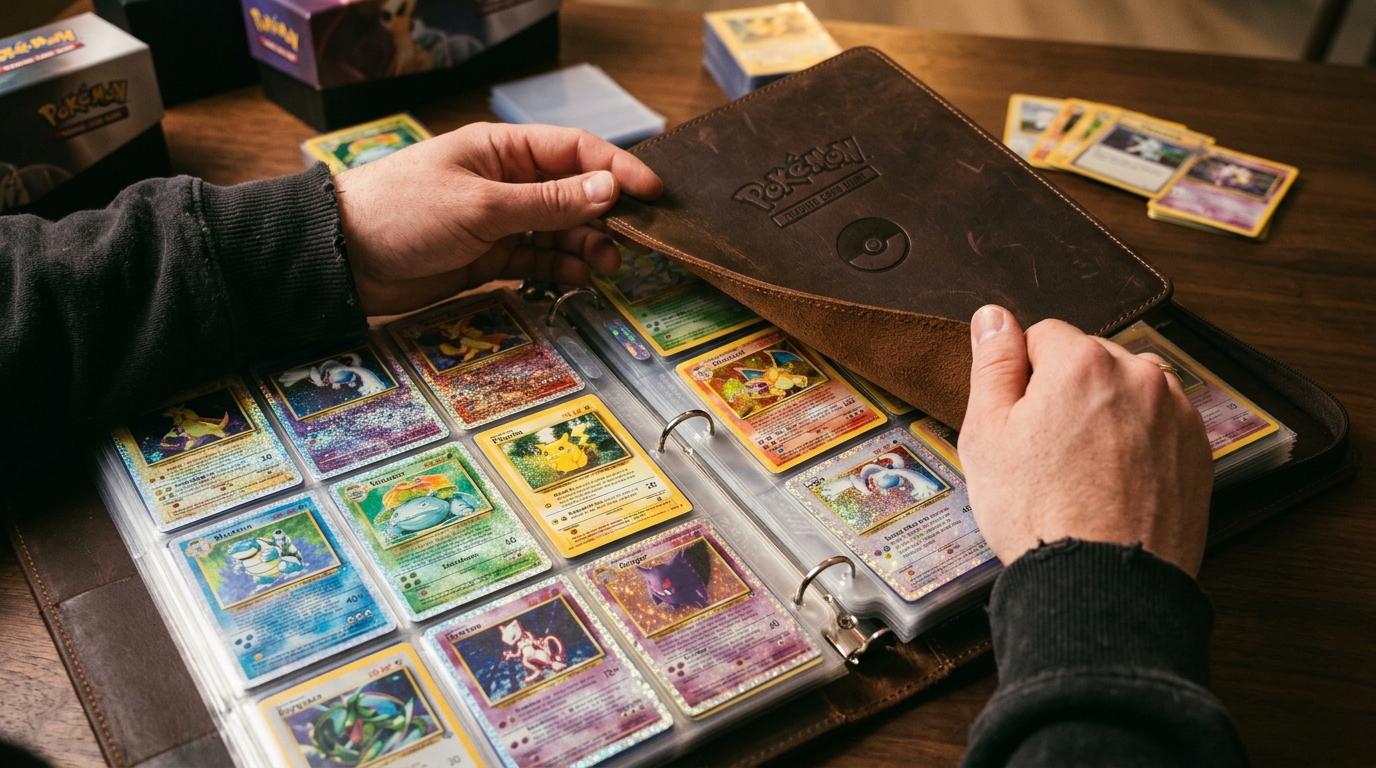
Discovering your pokemon card worth doesn’t have to be a guessing game or a tedious, hours-long chore. With thousands of card releases since 1999, varying print runs, and subtle visual indicators, the same Charizard card can range from $1 to over $400,000. Many collectors hold binders full of childhood cards thinking they are sitting on a retirement fortune, while others accidentally sell valuable refractors or secret rares for pennies. This step-by-step guide explains how to read your card, identify its exact edition, evaluate its condition, and determine its real market value.
Key Takeaway: Pokémon card value is determined by completed sold transactions, not optimistic online listings. Rarity symbols, set indicators, print editions, and physical condition dictate where in the pricing spectrum your card falls.
The Anatomy of a Pokémon Card: Essential Valuation Markers
To determine what your card is worth, inspect these four critical markers in order:
1. Identify the Card Name and Number
Every Pokémon card has its name printed clearly at the top and its card number printed at the bottom corner. The number is usually formatted as a fraction (for example, 104/185).
- The Card Index: The first number (the numerator) is the card’s specific index within that particular set.
- The Set Total: The second number (the denominator) represents the total number of officially numbered cards printed in that main set checklist.
- Secret Rare Cards: These are cards whose index exceeds the set total (e.g.,
186/185or201/198). Secret rares are printed in much lower quantities than standard cards and often feature special artwork, textured holographic foil, or gold borders. Because of their scarcity, they are highly sought after by collectors and carry a significant premium. - Promo Cards: Promotional cards are released outside of standard booster packs, such as in collectible tins, blister packs, or tournament events. They typically feature a unique prefix on the card number (like “XY”, “SM”, “SWSH”, or “SVP”) accompanied by a distinct black star symbol with the word “PROMO” printed across it.
2. Find and Identify the Set Symbol
Next to the card number, you will find a small icon or symbol. This symbol represents the specific print release (like Sword & Shield, Base Set, Crown Zenith, or Scarlet & Violet). Identifying this logo determines the exact year and edition of the card.
- Base Set (1999): A card without any set symbol next to the card number is likely from the original 1999 Base Set. This is the most famous set in the game’s history.
- Early Expansions: Early sets from the Wizards of the Coast (WotC) era have symbols placed on the right side of the card, just below the illustration frame. For example, Jungle features a flower/Vileplume silhouette, Fossil has a skeletal hand, and Team Rocket features a bold letter “R”.
- Modern Expansions: Modern cards display their set symbols in the bottom-left corner. Knowing how to identify these symbols is crucial to distinguishing a highly valuable original printing from a cheaper reprint set like Base Set 2 or Legendary Collection.
3. Check the Rarity Symbol
Check the bottom corner for a shape indicator that tells you how rare the card is:
- ● Circle (Common): Common cards form the bulk of any booster pack. They hold minimal value unless they are vintage 1st Edition prints in pristine condition.
- ◆ Diamond (Uncommon): Moderately rare cards, including Stage 1 evolutions, item cards, and Trainer cards.
- ★ Star (Rare): The highest standard rarity in booster packs. These include non-holographic rares, standard holographic rares, and ultra-rare cards.
- Special Rares (EX, GX, V, VMAX, VSTAR, ex): Modern sets introduced special rarity tiers. A double star (★★) or unique foil abbreviations indicate ultra-rare cards, such as Special Illustration Rares (SIR) or Illustration Rares (IR) in the Scarlet & Violet era.
- Promo Star: A black star with the word “PROMO” printed inside, indicating a promotional card.
4. Evaluate the Physical Condition
The physical state of the card determines its final sale price. Scratches on the foil surface, whitened edges on the back, and centering misalignment can decrease the value by 80% or more. Highly valuable cards are typically submitted for third-party grading (PSA/BGS/CGC) to lock in their condition. For a deeper understanding of how grading criteria work, see our guide on AI card grading and condition analysis.
Vintage vs. Modern Pokémon Cards: Key Valuation Factors
The trading card market is split into two distinct eras: Vintage (1999 to 2003, primarily published by Wizards of the Coast) and Modern (2018 to the present). The rules for valuing these eras differ significantly.
Vintage Card Valuation (The WotC Era)
For vintage cards, value is driven by nostalgic demand, historic print runs, and print variants.
- 1st Edition Stamp: A small circular stamp on the left side of the card, just below the art frame. This indicates the card is from the very first print run. 1st Edition cards are significantly scarcer and command massive price premiums.
- Shadowless Borders: In the original English Base Set, the first print runs lacked a drop shadow to the right of the yellow art frame. These “shadowless” cards also featured a thinner font for the HP value and a different copyright line at the bottom (“1995, 96, 98, 99 Wizards”). They are highly coveted.
- Holographic Swirls: Early cards used a star-patterned or cosmos-patterned holofoil. During the printing process, holographic film sometimes aligned to create a perfect circular “swirl.” Collectors pay a premium (often 10% to 50% more) for cards with a clean swirl positioned nicely in the artwork.
Modern Card Valuation (The Modern Era)
Modern cards are heavily mass-produced, so their value is driven by visual appeal, pull rates, and collectability.
- Alternate Arts & Special Illustration Rares (SIR): Starting in the Sun & Moon and Sword & Shield eras, Pokémon introduced “Alt Arts.” These cards replace the standard battle poses with beautiful, full-bleed scenic illustrations. They are the rarest cards in modern sets, with pull rates often as low as 1 in 72 to 1 in 144 booster packs.
- The “Waifu” Factor: In modern Pokémon collecting, Full-Art Supporter cards featuring popular female characters (such as Lillie, Erika, Iono, or Marnie) command massive premiums, particularly in the Japanese market. Some of these cards sell for thousands of dollars in gem-mint condition.
- Holographic Styles: Modern cards feature a variety of foil styles, including reverse-holos (where the card border and text box are shiny, but the art is not), full-art textured foils, and gold etched foils.
Physical Condition & Professional Grading Scales
No matter how rare a card is, its physical condition is the ultimate arbiter of its market value. A card that is worth $5,000 in perfect condition might only fetch $50 if it has been played with on a school playground.
To understand how condition maps to value, collectors use standardized grading scales. Professional grading companies (like PSA, BGS, and CGC) inspect cards under magnification to assign a score from 1 (Poor) to 10 (Gem Mint).
Here is a breakdown of the standard condition tiers and how they affect pricing:
| Condition Tier | Grading Score (PSA equivalent) | Key Physical Indicators | Market Value Multiplier (Approx.) |
|---|---|---|---|
| Gem Mint | 10 | Perfect centering (50/50 or 60/40), flawless surface, no edge wear, sharp corners under magnification. | 5.0x – 10.0x+ (Base value) |
| Mint / Near Mint | 8 – 9 | Almost perfect; perhaps 1-2 microscopic white dots on the back edges, minor centering offset, no surface scratches. | 1.0x (Standard baseline) |
| Excellent / Lightly Played (LP) | 6 – 7 | Mild edge wear (silvering on front edges, slight whitening on back), faint hairline scratches on the foil. | 0.5x – 0.7x |
| Moderately Played (MP) | 4 – 5 | Visible scratches on the foil, moderate edge whitening, minor corner wear, slight surface clouding. | 0.25x – 0.4x |
| Heavily Played (HP) | 2 – 3 | Major edge wear, significant scratches, slight creasing or pressure bends, surface dirt. | 0.1x – 0.2x |
| Damaged | 1 | Creases, water damage, writing, paper peeling, major bends, or tears. | 0.01x – 0.05x |
Why Grading Matters
Professional grading does three things: it authenticates the card, protects it in a sonically sealed plastic slab, and establishes an objective condition score. For highly valuable vintage cards, grading is essential. The difference between a PSA 9 and a PSA 10 Charizard can represent a jump of $10,000 or more because collectors are willing to pay a massive premium for perfection.
Step-by-Step Guide: How to Determine Your Pokémon Card Worth
If you want to find the true market value of your cards without falling into pricing traps, follow this step-by-step methodology.
Step 1: Identify the Exact Card
Write down the card’s name, its set number (the fraction), and note its set symbol. Also check if the card is holographic, reverse holographic, or non-holographic. Pay attention to whether there is a “1st Edition” stamp or if the card is shadowless.
Step 2: Use eBay Sold Listings
Never trust the first price you see on Google or active eBay listings. Anyone can list a common card for $1,000, but that doesn’t mean anyone will buy it.
- Go to eBay.com.
- Type in the card name and number (e.g., “Charizard 4/102 shadowless”).
- Scroll down the search filters on the left-hand sidebar (or use the filter menu on mobile).
- Check the box for “Sold Items” (which will automatically check “Completed Items”).
- Examine the most recent sales. This shows you what buyers are actually paying in real-time.
Step 3: Check Specialty Databases
For standard cards, specialty pricing databases provide excellent historical charts:
- TCGPlayer: The industry standard for English Pokémon cards. Look at the “Market Price” and filter by condition (Near Mint, Lightly Played, etc.) to get an accurate estimate.
- PriceCharting: Great for tracking historical trends of both raw (ungraded) and professionally graded cards.
- Cardmarket: The premier platform for European collectors, which displays average selling prices in Euros.
Step 4: Automate the Process with CardMint
If you have dozens or hundreds of cards to value, doing it manually is incredibly tedious. CardMint solves this by using artificial intelligence.
- Open the CardMint app on your phone.
- Point your camera at the card.
- The app’s AI scanner automatically extracts the Pokémon’s name, set symbol, card number, and foil type.
- It immediately pulls the live low, mid, and high market value estimates based on recent transactions.
- The app also performs an AI pre-grade check, evaluating the centering, corners, edges, and surface. It gives you a projected grade so you can decide if the card is worth sending to a professional grading company.
If you discover some highly valuable items in your collection, you can cross-reference them with our curated tracker of the most valuable Pokemon cards in 2026 to see how they rank.
Crucial Pitfalls & Valuation Traps to Avoid
Evaluating trading cards can be tricky, and beginners often make costly mistakes. Keep these common traps in mind:
Trap 1: The Base Set Machamp 1st Edition
Almost every collector who unearths their childhood binder finds a holographic Machamp with a “1st Edition” stamp and assumes they have a $500 card. Unfortunately, this Machamp was included in every single copy of the mass-produced 2-Player Starter Set. It is one of the most common holographic cards in existence and is typically worth only $5 to $15, despite the 1st Edition stamp.
Trap 2: Base Set 2 Confusion
In 2000, Wizards of the Coast released “Base Set 2,” which reprinted cards from the original Base Set and Jungle. These cards look very similar to the original 1999 prints but feature a small symbol next to the artwork—a Pokéball with a number 2 over it. Base Set 2 cards are generally worth 30% to 50% less than their original Base Set counterparts.
Trap 3: Active Listings vs. Completed Sales
Always remember: Asking price does not equal value. Sellers often list cards at inflated prices hoping a buyer will make an impulse purchase. Always filter by “Sold” listings to see real market data. This is a rule that applies across all collectibles; for instance, you can read our guide on how to price sports cards for selling to see how transaction-based pricing is crucial in the sports card world too.
Trap 4: Counterfeits and Reprints
As Pokémon card values have skyrocketed, the market has been flooded with high-quality fakes. Common signs of a fake card include:
- Poor print quality: The text is blurry, the fonts are incorrect, or the energy symbols look off-center.
- Cheap materials: Fake cards are often printed on flimsy paper, lack the distinct black layer in the middle of the card stock (visible from the side), or have a glossy, greasy texture.
- Incorrect holographic patterns: Many fake modern cards have a flat, vertical rainbow foil shine instead of the diagonal, textured patterns found on genuine ultra-rares. If you are unsure of your card’s authenticity, check out our guide on how to spot a fake card to avoid getting scammed.
How to Value and Sell a Complete Pokémon Collection
If you have inherited or want to liquidate a complete collection, you have two choices: selling it as a bulk lot or selling the valuable cards individually.
- Valuable Singles: Any card worth more than $10 should be set aside. These should be photographed individually, stored in penny sleeves and toploaders, and sold on platforms like eBay, TCGPlayer, or Facebook groups.
- Bulk Cards: Common, uncommon, and non-holographic rare cards are usually sold in bulk. Bulk is priced per card (e.g., $3 to $5 per 1,000 cards). Selling bulk as a lot is the fastest way to clean out space, but do not expect a high payout.
- Proper Storage: To preserve the value of your cards, always store them in acid-free plastic sleeves (penny sleeves) and rigid plastic cases (toploaders). Keep your cards in a cool, dry place away from direct sunlight to prevent the foil from curling or fading.
Frequently Asked Questions
How do I find out what my Pokémon card is worth?
To find out what your card is worth, locate the card name, its set number (fraction), and set symbol. Look up this information on eBay and filter by “Sold Items,” or check a pricing database like TCGPlayer or PriceCharting. For an instant valuation, scan the card using the CardMint app, which pulls live marketplace data.
Why are asking prices higher than what cards actually sell for?
Anyone can list a card at any price, so “buy it now” listings often represent unrealistic expectations rather than real market values. Completed (sold) prices show what buyers actually paid. Always base your estimates on sold data, not what people are asking.
How much is a common Pokémon card worth?
Most common base cards—especially from newer sets—are worth well under 5 to 10 cents each. Value is highly concentrated in vintage 1st Edition holographic cards, secret rares, full-art trainers, and special promotional cards.
Do I need to grade my Pokémon cards before selling them?
Not always. Grading costs money (typically $15 to $50 per card) and takes weeks. It only makes sense if the card is in near-perfect condition and its graded value is significantly higher than its raw value. Use CardMint’s AI pre-grader to evaluate your card’s condition before spending money on grading.
What is a holographic swirl and does it add value?
A holographic swirl is a circular print pattern that occasionally appears on the foil of vintage cards (primarily from the Wizards of the Coast and EX eras). While it is not a formal rarity tier, many collectors are willing to pay a premium of 10% to 50% for cards that feature a complete, well-placed swirl in the artwork.
Are Japanese Pokémon cards worth more than English ones?
It depends on the card and the era. For vintage cards, English versions usually command higher prices due to broader global nostalgia. However, for modern cards—particularly Full-Art Supporter cards and certain high-end secret rares—Japanese versions often carry a significant premium due to higher card stock quality, cleaner textures, and strong collector demand in Asia.
Pre-Grade & Track Values Instantly with CardMint
CardMint is the ultimate all-in-one scanner for sports card and TCG collectors, saving you time and money.
Simply scan the front of your card. Our AI instantly identifies the card details, checks current pricing metrics, and gives you a centering and wear pre-grade report before you submit to PSA/BGS.
