
Pokemon Card Valuation: Collector's Price Guide
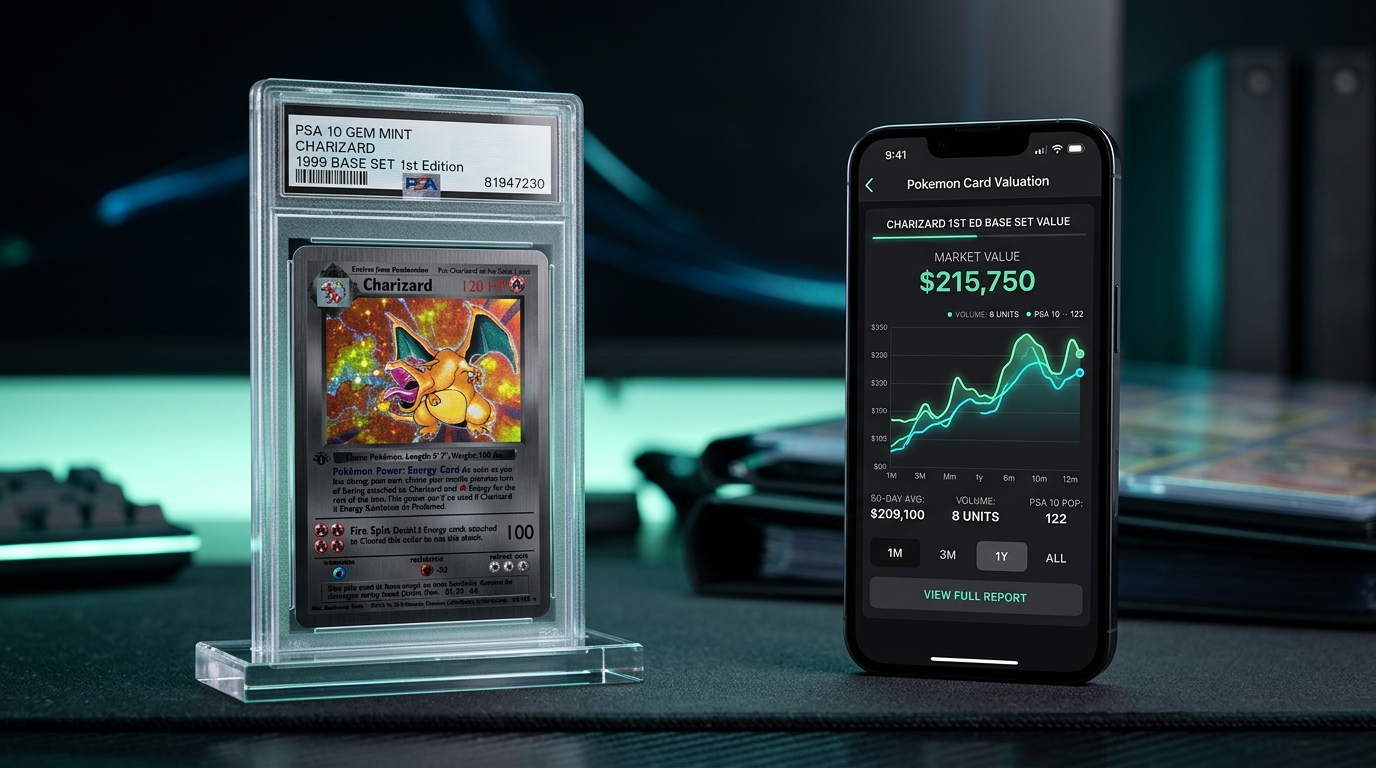
Conducting a proper pokemon card valuation is essential for any collector looking to sell, trade, or insure their valuable cards. Whether you just found your old childhood binder in the attic or you are an active collector looking to optimize your portfolio, knowing the actual cash value of your cards protects you from getting ripped off. The Pokémon TCG market has matured from a simple schoolyard trade to a multi-billion dollar asset class. However, this maturity means that determining the precise value of a card requires more than just searching its name on eBay. You must analyze the card’s edition, set indicators, physical condition, and professional grading status.
In this comprehensive guide, we will walk you through the entire step-by-step process of evaluating your collection. You will learn how to identify hidden rarities, evaluate physical wear, and utilize online resources to check live transaction records. By the end of this article, you will have a professional framework for card valuation.
1. Understanding Rarity: The Foundation of Pokémon Card Pricing
Before you can determine what your cards are worth, you must identify their rarity. Pokémon cards use a standardized system of symbols and print treatments to denote scarcity.
Rarity Symbols
On the bottom corner of every card, you will find a small symbol:
- Circle (●): Common cards. These make up the bulk of booster packs.
- Diamond (◆): Uncommon cards. These include mid-tier Pokémon, Trainers, and special Energy cards.
- Star (★): Rare cards. These are the primary targets for collectors.
- Special Stars (Star H, Ultra Rare, Secret Rare): These include Holofoil Rares, Ultra Rares (EX, GX, V, VMAX), and Secret Rares that feature set numbers higher than the official set checklist (e.g., 101/100).
To get a quick overview of what your rare cards might be worth, you can check our guide on the most valuable pokemon cards to see the absolute peak of the market.
Foil Treatments and Holofoil Patterns
The visual treatment of the card heavily influences its collector demand:
- Holographic (Holo): The central artwork has a shiny, metallic foil appearance.
- Reverse Holographic (Reverse Holo): Every part of the card is shiny except for the central artwork.
- Full Art: The artwork covers the entire face of the card, extending over the text boxes.
- Rainbow Rare / Golden Rare: The card has a textured, colorful rainbow or clean metallic gold finish.
Understanding these distinctions is critical. A standard non-holo card might be worth $0.50, whereas its holographic or reverse holo counterpart from the same set could command $10 to $50.
2. Card Identification: Finding the Set and Serial Number
Every Pokémon card features markers that pinpoint its exact printing year and set. You cannot run a correct card valuation without these three data points:
- The Card Name: Located at the top of the card.
- The Set Symbol / Logo: Found on the bottom right or bottom left corner of modern cards (and next to the character frame on older Wizards of the Coast cards).
- The Collector Number: Format like
XX/YY. This represents the card’s index number within the set checklist.
For example, a Base Set Charizard is identified as 4/102. A newer Charizard might be listed as 008/185.
If you are dealing with vintage cards (printed between 1999 and 2003), you must also look for the 1st Edition stamp (a small “1” inside a circular badge on the left side of the card). A 1st Edition Base Set card can be worth 10x to 50x more than an identical “Unlimited” version printed just months later. To estimate vintage valuations, you can read our breakdown of pokemon card worth to understand the nuances of printing runs.
3. The Grading Spectrum: Assessing Physical Condition
Physical condition is the single most important factor in determining the real-world price of a card. In the collecting community, condition is standardly classified into several key tiers:
Mint (M) / Near Mint (NM)
The card shows virtually no signs of wear. There are no surface scratches, no whitening on the dark blue borders of the card back, and the centering of the border is highly symmetrical.
Lightly Played (LP)
Minor imperfections are visible upon close inspection. This includes tiny spots of white paint wear on the back edges, faint surface scuffs, or minor border scratches.
Moderately Played (MP)
The card has clear wear. You will observe multiple points of edge whitening, noticeable scratching on the holographic foil, or light scuffs on the borders.
Heavily Played (HP) / Damaged (DMG)
Major defects are immediately obvious. This includes deep creases, water damage, severe ink peeling, peeling foil, or heavy dirt build-up. A damaged card typically loses 80% to 95% of its Near Mint value.
To understand professional standards of physical wear and centering, refer to our detailed breakdown on pokemon card grading where we explain how professional companies like PSA, BGS, and CGC score cards from 1 to 10.
4. How to Research Real Market Prices
The biggest mistake amateur collectors make during a pokemon card valuation is relying on the prices sellers ask for on sites like eBay or TCGPlayer. A seller can list a card for $10,000, but that does not mean it is worth that much. You must look at what buyers have actually paid.
TCGPlayer and CardMarket
For raw (ungraded) cards, TCGPlayer (US) and CardMarket (Europe) are the gold standards. Look at the Market Price and the Recent Sales tab. Filter by the exact card condition to match the state of your card.
eBay Sold Listings
For both raw and graded cards, eBay is a massive source of transaction history:
- Search for your card using its name and set number (e.g., “Umbreon VMAX 215/203”).
- Open the filter sidebar and check the box for “Sold Items” or “Completed Items”.
- The results will display actual completed sales, highlighted in green. Use the average of the last 5-10 sales to determine a realistic baseline price.
To save time during this step, you can use a digital pokemon price checker tool that aggregates these sales databases automatically into a single dashboard.
5. Raw vs. Graded Value: The Professional Premium
Professional grading involves sending your card to a third-party authentication company (like PSA, Beckett, or CGC) to verify its authenticity and assign it a numeric score from 1 (Poor) to 10 (Gem Mint).
The Value Multiplier of a PSA 10
If a card is a popular character (like Charizard, Pikachu, or Rayquaza) and receives a perfect Gem Mint 10 grade, its value can skyrocket. For instance, a raw modern card worth $100 might sell for $300 to $400 as a PSA 10 because of the certified scarcity of perfect condition.
When is Grading Worth the Cost?
Grading fees typically start around $15 to $25 per card plus shipping and insurance. You should only grade a card if:
- The card’s raw value is already high (over $50).
- The card is in flawless condition (Near Mint-Mint).
- The difference between the raw value and the graded value is greater than the grading cost.
If you have sports cards in your collection along with TCG cards, you can also review our general guide on sports card value to understand how professional grading works across different card categories.
Frequently Asked Questions
How do I check my Pokémon card value for free?
You can search the card’s name and set number on eBay and filter by “Sold Items” to see recent transaction history. Alternatively, use free price database websites like TCGPlayer or PriceCharting to look up raw and graded sales records instantly.
Why is physical condition so important for card valuation?
Collectors pay a premium for perfect cards. Even minor flaws like tiny white specks on the back corners or subtle surface scratches can drop a card’s grade from a Gem Mint 10 to a 7 or 8, which can reduce its market value by 50% or more.
What is the difference between Unlimited and 1st Edition?
1st Edition cards were part of the very first print run of a set and feature a circular “1st Edition” stamp on the left side of the card. Unlimited cards were printed in subsequent runs and do not have the stamp. 1st Edition cards are much rarer and command significantly higher values.
Should I grade all of my old holographic cards?
No. You should only grade holographic cards that are in excellent (Near Mint to Mint) condition and have a market value that justifies the grading fee. Common or heavily played vintage holos are often worth less than the cost of grading itself.
How do I know if my Pokémon card is a fake?
Fake cards often feel thin or unusually glossy, have blurry text printing, feature incorrect font styles, or lack the black layer of paper sandwiched in the middle of authentic card stock. Real cards will also have crisp, distinct holographic foil patterns rather than a cheap rainbow sheen printed directly onto the paper.
Pre-Grade & Track Values Instantly with CardMint
CardMint is the ultimate all-in-one scanner for sports card and TCG collectors, saving you time and money.
Simply scan the front of your card. Our AI instantly identifies the card details, checks current pricing metrics, and gives you a centering and wear pre-grade report before you submit to PSA/BGS.
