
The Most Expensive Baseball Card: Value & History Guide
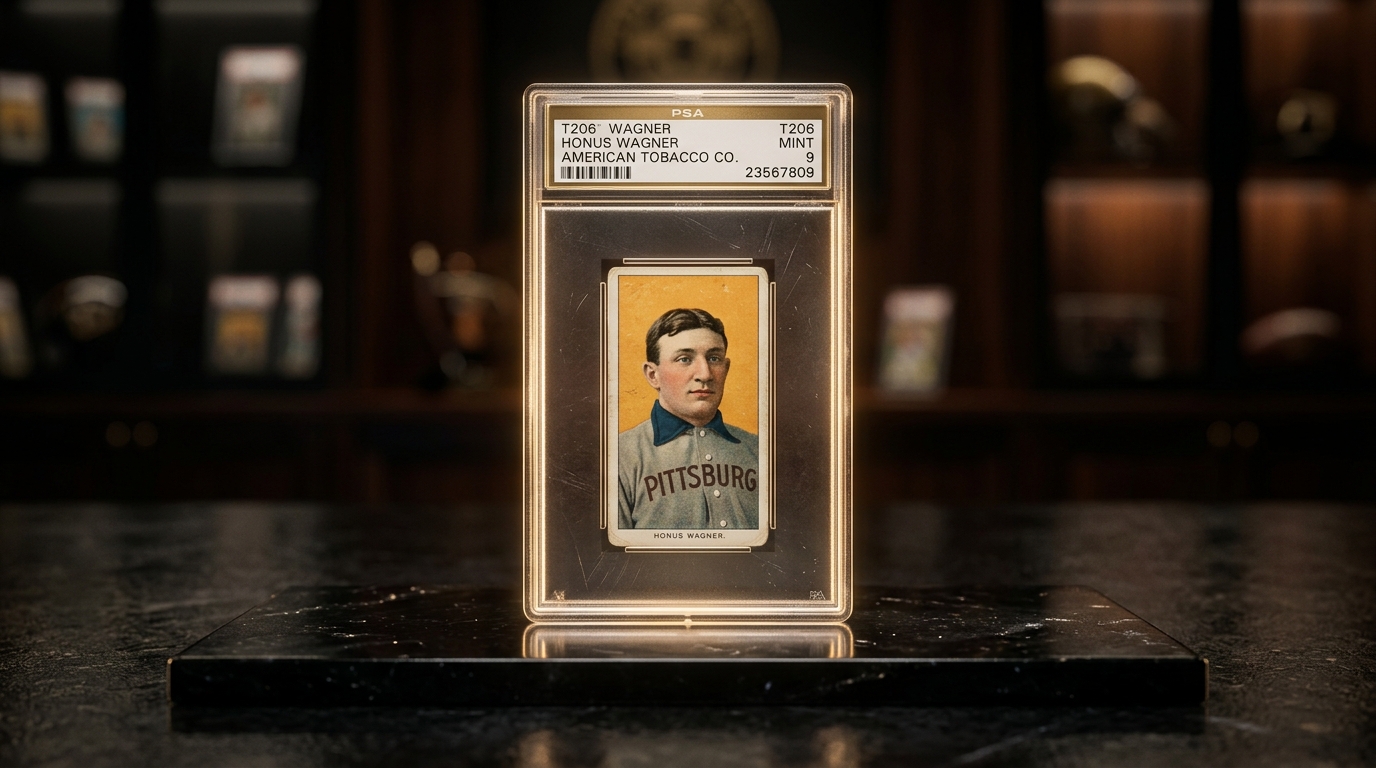
When you look at the hobby today, the most expensive baseball card sales represent more than just cardboard; they are blue-chip alternative investments that rival fine art. Over the past decade, the trading card market has evolved from a nostalgic pastime into a multi-billion dollar asset class. High-net-worth investors, venture capital funds, and passionate collectors compete in high-stakes auctions to acquire legendary cards that are as rare as historical manuscripts. Knowing what makes a card valuable is essential, whether you are holding a vintage family heirloom or checking modern card packs.
To understand the modern market, one must analyze the legendary sales, the historical significance of the players, and the strict standards of professional grading. In this comprehensive guide, we will explore the record-breaking sales, dissect the factors that drive these astronomical valuations, and teach you how to evaluate your own collection using modern tools.
The Legendary T206 Honus Wagner: The Holy Grail of Collecting
If there is one name that is synonymous with vintage card collecting, it is Honus Wagner. The T206 Honus Wagner is universally recognized as the “Holy Grail” of the hobby. Produced between 1909 and 1911 by the American Tobacco Company as part of its T206 series, this card is not only rare but also carries an aura of mystery that has fascinated collectors for over a century.
The Mystery of the Short Print
Why does the T206 Honus Wagner command millions? The primary reason is its extremely limited supply. It is estimated that only 50 to 200 copies of the Wagner card were ever distributed to the public. There are two primary theories explaining this short print. The most popular theory is that Honus Wagner, a non-smoker and a man of strong principles, did not want his likeness used to market tobacco products to children. He demanded that the American Tobacco Company halt production of his card. Another theory suggests that Wagner and the tobacco company could not agree on financial compensation for using his image. Regardless of the actual reason, the plates were destroyed, leaving only a handful of cards in existence.
Recent Sales and Record-Breaking Prices
For decades, the T206 Honus Wagner held the record for the highest price ever paid for a trading card. In August 2022, a copy of the T206 Honus Wagner graded SGC 2 (Good) sold in a private transaction for a staggering $7.25 million. This shattered the previous record of $6.6 million set by another Wagner card just a year prior. Even in low grades, the Wagner card remains the ultimate status symbol for high-end sports collectors, representing a piece of American sports history that is almost impossible to replicate.
The 1952 Topps Mickey Mantle: The Post-War King
While the T206 Honus Wagner is the pre-war holy grail, the post-war era is dominated by one card: the 1952 Topps Mickey Mantle. This card holds the current all-time record for the highest price paid for a sports card, cementing Mickey Mantle’s status as the ultimate icon of modern sports memorabilia.
The Case of the Dumped Cards
The 1952 Topps baseball set was the first major release by Topps, designed by the legendary Sy Berger in his Brooklyn apartment. The set was a massive success, but the high-number series (which included the Mickey Mantle card) was released late in the year when the public’s attention had shifted to football. As a result, boxes of the high-number series sat unsold in warehouse basements for years. In 1960, facing storage constraints, Sy Berger made the painful decision to load thousands of unsold 1952 Topps cards onto a barge and dump them into the Atlantic Ocean. This tragic event drastically reduced the population of high-grade Mickey Mantle cards, making surviving copies exceptionally rare.
The Grade That Changed History
In August 2022, a 1952 Topps Mickey Mantle card graded SGC 9.5 (Mint+) sold for an unbelievable $12.6 million at Heritage Auctions. This sale made it the most expensive sports card ever sold, surpassing the T206 Wagner. The card was owned by collector Alan Rosen, who purchased it in 1986 as part of a famous find in Quincy, Massachusetts. The pristine condition of the card, combined with the legendary status of the New York Yankees outfielder, created the perfect storm for a record-breaking auction.
Other Record-Breaking Baseball Cards
While Wagner and Mantle dominate the headlines, several other cards have crossed the million-dollar threshold, highlighting the depth and diversity of the modern sports card market.
- 1914 Baltimore News Babe Ruth: Before he was a Yankee, George Herman “Babe” Ruth was a young pitcher for the minor league Baltimore News. A rare copy of his pre-rookie card sold for $7.2 million in 2023. Only about ten copies of this card are known to exist, making it one of the rarest Babe Ruth items in the world.
- 2009 Bowman Chrome Draft Prospects Mike Trout Superfractor (1/1): Modern cards can also command massive premiums. The one-of-one autographed rookie card of Los Angeles Angels superstar Mike Trout sold for $3.93 million in August 2020. This sale proved that modern “ultra-modern” cards could compete with vintage masterpieces if they feature the right player and absolute rarity.
- 1933 Goudey Babe Ruth (PSA 9): The Goudey Gum Company produced some of the most beautiful cards of the 1930s. A PSA 9 copy of Babe Ruth’s card #181 sold for $4.21 million in 2021, illustrating the immense premium placed on high-grade vintage cards of legendary figures.
Key Factors That Determine the Value of Rare Baseball Cards
If you want to understand how a piece of cardboard can be worth millions, you must understand the criteria that collectors and auction houses use to evaluate sports cards. The formula for a card’s value is built on four pillars: rarity, condition, player legacy, and historical significance.
The Role of Professional Grading
In the early days of collecting, card condition was subjective. This changed with the rise of third-party grading services like PSA (Professional Sports Authenticator), SGC (Sportscard Guaranty Corporation), and BGS (Beckett Grading Services). These companies evaluate cards under magnification to check for edge wear, corner softness, surface scratches, and print centering. A card is assigned a grade from 1 (Poor) to 10 (Gem Mint).
The difference between grades is financially massive. As explored in our guide on sports card value, a card graded PSA 10 can be worth ten times more than the same card graded PSA 9. Professional grading provides a standardized language for buyers and sellers, making high-value transactions secure. If you are preparing cards for submission, understanding the nuances of AI card grading can help you estimate your potential grades before spending money on fees.
Population Reports and Rarity
Every grading company maintains a public “Population Report” showing how many copies of a specific card have been graded at each level. If a card is popular but has a low population in high grades (known as a “low pop” card), its value rises exponentially. For example, thousands of 1986 Fleer Michael Jordan rookie cards exist, but only a small fraction are graded PSA 10. The rarity of the perfect grade is what drives the six-figure price tags, not just the card itself.
Understanding the jargon of the hobby, such as what does RC mean for rookie cards, is crucial because rookie cards are almost always the most valuable card of any given player. Additionally, learning how to spot fake sports cards is an essential skill to protect yourself from counterfeiters who target these high-value items.
How to Start Valuing Your Own Card Collection
If you have a box of old cards in the closet, they might not contain a Honus Wagner, but they could still hold significant value. Follow these steps to research and value your collection accurately.
Step 1: Identify the Card Details
Look closely at the card to find the player’s name, the manufacturer (e.g., Topps, Upper Deck, Bowman), the year of release, and the card number (usually printed on the back). Vintage cards can sometimes be identified by their designs, while modern cards often have specific set logos.
Step 2: Research Recent Sold Prices
Never rely on active listings on sites like eBay, as sellers can ask for any price they want. Instead, filter by “Sold Items” to see what buyers have actually paid. You can also use online price guides such as TCGPlayer, Card valuations platforms, and historical auction records.
Step 3: Assess the Card’s Condition
Inspect the corners, edges, and surface. Look for creases, stains, or off-center printing. If the card is in rough shape, its value will be a fraction of the high-grade price. For a fast and accurate assessment, you can use modern mobile apps.
For example, CardMint offers a state-of-the-art mobile scanner that identifies cards instantly and provides estimated market values. You can learn more about how to preserve your cards in our guide on how to store baseball cards to prevent wear and tear.
Frequently Asked Questions (FAQ)
What is the most expensive baseball card ever sold?
The most expensive baseball card ever sold is the 1952 Topps Mickey Mantle graded SGC 9.5, which sold for $12.6 million in August 2022. It is followed closely by the T206 Honus Wagner SGC 2, which sold for $7.25 million.
Why is the T206 Honus Wagner card so valuable?
The T206 Honus Wagner is valuable due to its extreme rarity and historical mystique. Only 50 to 200 copies were ever distributed because production was stopped early, likely because Wagner opposed marketing tobacco to children or due to a licensing dispute.
Does grading a card increase its market value?
Yes, professional grading from companies like PSA, SGC, or BGS can increase a card’s value by certifying its authenticity and establishing an official condition grade. A high grade (like a PSA 10 Gem Mint) makes the card highly desirable to collectors and investors.
How do I check the value of my old baseball cards?
You can check card values by identifying the year, manufacturer, and card number, then searching for “Sold” listings on eBay or using online price databases. For instant scanning and real-time market estimates, you can use the CardMint app on your phone.
Pre-Grade & Track Values Instantly with CardMint
CardMint is the ultimate all-in-one scanner for sports card and TCG collectors, saving you time and money.
Simply scan the front of your card. Our AI instantly identifies the card details, checks current pricing metrics, and gives you a centering and wear pre-grade report before you submit to PSA/BGS.
