
Pokemon Card Price Guide: Track Real TCG Values
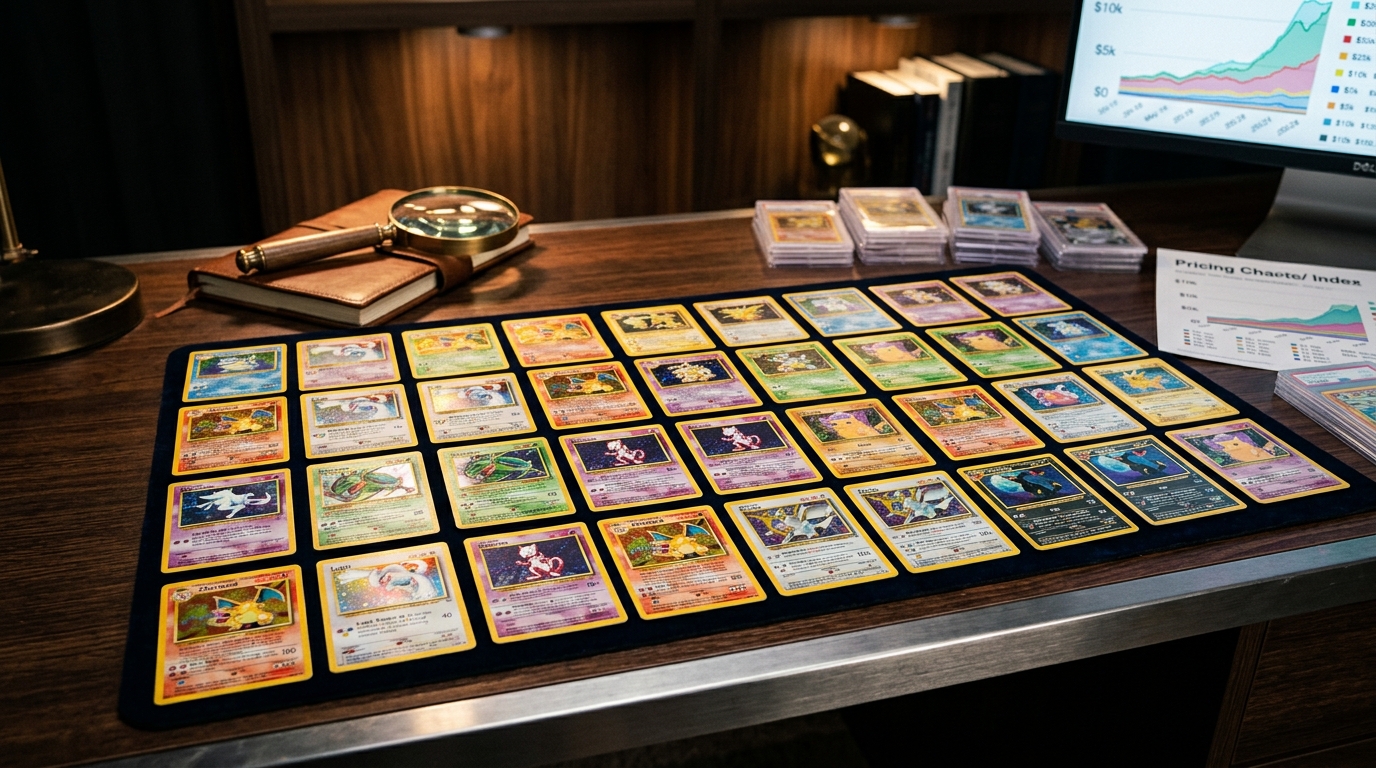
Using a reliable pokemon card price guide is the most critical step for collectors looking to track card values, buy new singles, or sell their collection for maximum profit. The Pokemon Trading Card Game (TCG) has experienced unprecedented growth, evolving from a standard schoolyard game into a highly complex, multi-million dollar alternative asset market. Today, cards like the Base Set Shadowless Charizard or modern special illustration rare cards are treated with the same financial diligence as blue-chip stocks or fine art.
To successfully navigate this landscape, you must understand how prices are established, how to identify the exact card version you own, and how to utilize modern tracking platforms to ensure you never leave money on the table. In this ultimate guide, we will break down the mechanics of Pokemon card pricing, discuss the factors that make a card valuable, and provide actionable tips for checking and tracking your collection’s value.
Key Takeaway: Realizing the true value of your collection requires verifying the set name, print run, and card number, checking active sales history, and determining if professional grading is appropriate. Never rely on active listings; always analyze completed sales.
How to Use a Pokemon Card Price Guide to Value Your Cards
Determining your card’s worth is not as simple as matching the character name to a price sheet. A single Pokemon character, such as Charizard or Pikachu, has been printed on hundreds of different cards across dozens of sets over the last three decades. To use a price guide effectively, you must follow a systematic identification process.
Step 1: Identify the Set Symbol and Set Number
Every Pokemon card features a card number in the bottom corner (e.g., 115/112 or 089/193). This format displays the card’s individual number within that specific set’s print order. Additionally, next to or near the card number, you will find a small graphic icon. This is the set symbol, which identifies the expansion set the card belongs to (such as Scarlet & Violet: 151, Paldea Evolved, or vintage sets like Jungle and Fossil). By entering the character name and the exact card number into a search tool, you can isolate the precise card version you possess.
Step 2: Determine the Card’s Rarity
Pokemon cards utilize several levels of rarity, which dictate how frequently they appear in booster packs. Common rarity levels include:
- Common (Circle Symbol): Standard cards found in almost every booster pack.
- Uncommon (Diamond Symbol): Slightly harder to pull than common cards.
- Rare (Star Symbol): The highest tier of standard cards, which can feature holographic or reverse-holographic finishes.
- Ultra Rare / Secret Rare: These cards exceed the standard set number (e.g., card
198/193) and often feature full-art illustrations, gold borders, or textured surfaces.
To dig deeper into determining rarity and tracking valuations, check out our pokemon card worth analysis and see how these symbols correlate to long-term market value.
Step 3: Assess the Card’s Physical Condition
The physical condition of a card is the single most important multiplier of its final price. A card that is valued at $100 in flawless condition might only fetch $10 if it has minor scratches, edge wear, or creased corners. Price guides generally categorize card condition using standard hobby tiers:
- Near Mint (NM): Shows minimal to no wear from handling.
- Lightly Played (LP): May exhibit minor silvering on borders or slight surface wear.
- Moderately Played (MP): Noticeable edge wear, minor whitening, or light scratches.
- Heavily Played (HP): Extreme wear, major whitening on the back, or small creases.
- Damaged (DM): Severe creases, water damage, writing, or rips.
Key Factors That Determine Pokemon Card Prices
Now that you know how to identify your card, it is essential to understand the underlying market dynamics that drive Pokemon card prices up or down. Rarity is only part of the equation; several other factors dictate value.
1. Competitive Playability vs. Collectibility
Some Pokemon cards are highly valuable simply because they are incredibly powerful in the active TCG competitive metagame. Cards like Forest Seal Stone or Charizard ex see frequent play in major tournaments, driving up demand among players who need them for competitive decks. Conversely, some cards have high value solely due to their collectibility. “Waifu” cards (full-art female trainer cards) or iconic starter Pokemon (Charizard, Blastoise, Venusaur) maintain premium pricing due to character popularity, even if they have zero utility in tournament play.
2. Vintage Status and Print Era
The history of the Pokemon TCG is divided into distinct eras:
- Vintage Era (1999–2003): Cards printed by Wizards of the Coast (WOTC). These have the highest historical value due to nostalgia and limited surviving mint-condition copies.
- Mid-Era (2004–2019): Sets from the EX, Diamond & Pearl, HeartGold SoulSilver, Black & White, XY, and Sun & Moon generations. Rarity configurations like EX, Lv.X, Prime, and Gold Star cards are highly sought after.
- Modern Era (2020–Present): Sets from the Sword & Shield and Scarlet & Violet generations. These feature high print runs but have massive appeal due to alternative art cards and special illustration rares.
For a detailed review of vintage and modern collections, see our guide on the most valuable pokemon cards to identify which historic print runs hold the highest premium.
3. Professional Grading (PSA, BGS, SGC)
Professional authentication and grading can increase a card’s value exponentially. A third-party grading service evaluates the card under magnification, checks its centering, corners, edges, and surface quality, and seals it in a protective plastic slab with a score from 1 to 10. A card that scores a perfect “PSA 10 Gem Mint” often sells for several times the price of an ungraded “raw” card.
If you are considering grading your cards to lock in their value, review our comprehensive guide on pokemon card grading to understand the costs, turnaround times, and pricing multipliers associated with grading.
Where to Find the Most Accurate Pokemon Card Pricing Online
To find the current market price of your cards, you should consult recognized platforms rather than relying on arbitrary search engine results. The three industry standards are:
TCGPlayer (Market Price)
TCGPlayer is the largest online marketplace for trading cards in North America. Their “Market Price” is calculated using a rolling average of actual completed transactions. This makes it the most accurate tracker for raw (ungraded) modern cards, reflecting what buyers are actively paying in real-time.
eBay (Completed/Sold Listings)
eBay is the absolute best tool for determining the value of vintage cards, rare collectibles, and professionally graded cards. To find the real value, search for your card, scroll down the filter sidebar, and select “Sold Items” or “Completed Items”. This filter shows the exact amount a buyer paid, filtering out unrealistic listing prices that sellers might post.
PriceCharting and Cardmarket
For collectors looking for a streamlined chart visualization of historical prices, PriceCharting aggregates sales data from both eBay and online marketplaces to show the price trajectory of raw and graded cards over time. For European collectors, Cardmarket provides the primary baseline for TCG pricing.
To compare these platforms and see how they calculate values automatically, read our review of the top pokemon price checker tools currently available in the hobby.
Dynamic Pricing: Understanding Market Fluctuations
Like any financial market, Pokemon card values are subject to sudden shifts. Staying ahead of these trends can help you decide when to sell your cards and when to buy them.
| Market Trigger | Impact on Price | Best Action for Collectors |
|---|---|---|
| New Expansion Set Launch | Temporary drop in older card prices; high hype prices on new singles. | Wait 4–6 weeks after a new set launch before buying singles as prices settle. |
| Competitive Deck Wins a Regional | Rapid spike in the specific cards used in the winning deck. | Sell tournament-viable cards immediately if you do not plan to play them. |
| Hype or Influencer Coverage | Sudden bubble spikes on specific vintage or alt-art cards. | Avoid buying during hype bubbles; wait for the natural correction phase. |
| Anniversary Events (e.g., 30th Anniversary) | Global increase in nostalgia-driven vintage card values. | Hold high-grade vintage cards leading up to major franchise milestones. |
For a broader perspective on valuing cards in the wider hobby, you can check out our guide on general pokemon card valuation strategies to build a resilient, long-term portfolio. If you decide it is time to cash out, make sure to read our walkthrough on how to sell pokemon cards to learn about fee structures, shipping safety, and choosing between local shops, online marketplaces, or consignments.
Frequently Asked Questions (FAQ)
How do I check the value of my Pokemon cards?
To check the value of your cards, locate the card number and set symbol in the bottom corner of the card. Search for this information on a reliable platform like TCGPlayer (for raw modern cards) or search eBay completed sold listings (for vintage or graded cards). Avoid relying on active listing prices, as they do not reflect actual completed transactions.
What makes a Pokemon card valuable?
A Pokemon card’s value is determined by its rarity (indicated by symbols like stars, ultra-rare patterns, or secret numbers), its physical condition (Near Mint vs. Lightly Played), the popularity of the character featured (such as Charizard or Pikachu), and whether the card has been professionally graded by services like PSA or BGS.
Is professional grading worth it for all Pokemon cards?
No, professional grading is generally only worth it for cards that have high initial value (raw value over $50) and are in pristine, mint condition. Grading lower-value cards or cards with visible wear rarely increases the price enough to offset the grading fees and shipping costs.
What is the difference between holographic and reverse-holographic cards?
A holographic card features a shiny, reflective foil pattern on the character illustration window, while the rest of the card remains matte. A reverse-holographic card features foil on the entire card border and text box, while the character illustration window remains matte. Generally, standard holographic cards command a higher price premium than their reverse-holographic counterparts.
Pre-Grade & Track Values Instantly with CardMint
CardMint is the ultimate all-in-one scanner for sports card and TCG collectors, saving you time and money.
Simply scan the front of your card. Our AI instantly identifies the card details, checks current pricing metrics, and gives you a centering and wear pre-grade report before you submit to PSA/BGS.
